Full-Arch Implant Prosthetics, Dentures, and Long-Term Maintenance with Dr. Kim Schlam
A prosthodontic discussion on All-on-X treatment, overdentures, dentures, ethical patient selection, prosthetic maintenance, and the difference between replacement and rehabilitation.
Full-Arch Implant Dentistry Is Not a Product. It Is a Lifetime Responsibility.
The most consequential full-arch implant decisions are not only surgical or financial. They are ethical, biologic, prosthetic, hygienic, and longitudinal. Once a patient receives a complex implant reconstruction, someone must help that patient maintain it for life.
In this episode of the Dental Digest Podcast, Dr. Melissa Seibert speaks with Dr. Kim Schlam about full-arch implant prosthetics, hybrid restorations, overdentures, complete dentures, and the clinical judgment required to match the treatment to the patient.
The conversation challenges the idea that every edentulous or terminal-dentition patient should automatically receive an All-on-X reconstruction. Instead, Dr. Schlam argues for a rehabilitation-centered approach: diagnose the disease, evaluate the patient’s anatomy and goals, offer removable and fixed options, and commit to the maintenance protocols that complex prostheses require.
From Implant Reconstruction to Prosthetic Rehabilitation
Why All-on-X Is Not for Every Patient
Dr. Schlam makes a critical distinction between using implants well and using implants indiscriminately. Full-arch fixed implant restorations can be life-changing for the right patient, but they can also be destructive if treatment planning ignores anatomy, finances, function, hygiene capacity, parafunction, age, prosthetic space, temporomandibular status, speech, swallowing, and maintenance realities.
The episode pushes back against the language of calling patients “arches.” Once a person becomes a commodity or a treatment category, clinical judgment can erode. Dr. Schlam reframes the patient as a human being undergoing oral and facial rehabilitation, not merely receiving replacement parts.
Mandibular Edentulism Is Different from Maxillary Edentulism
The conversation returns to the original rationale for dental implants: improving the function of patients suffering from mandibular edentulism. The mandibular denture problem is fundamentally different from the maxillary denture problem. A well-made maxillary complete denture can serve many patients effectively, while mandibular edentulism often presents a much greater functional challenge.
This is why mandibular implant overdentures remain such an important treatment option. The decision is not fixed versus removable as a status hierarchy. The question is what form of prosthesis best restores the patient’s function, comfort, esthetics, hygiene access, anatomy, and long-term resilience.
Start With the Best Removable Prosthesis First
One of the most practical clinical takeaways is that an unhappy denture patient does not automatically need implants. Sometimes the first step is to determine whether the existing prosthesis is ideal. Are the teeth in the right position? Is the vertical dimension appropriate? Is the border extension correct? Has the denture been relined? Is the occlusion acceptable? Is the patient cleaning and maintaining it properly?
Dr. Schlam emphasizes that placing implants under a poorly designed denture does not solve the underlying prosthetic problem. First, the clinician should create the best possible prosthetic setup. Only then can the patient and clinician meaningfully decide whether implant retention, implant support, a bar overdenture, or a fixed full-arch prosthesis is appropriate.
Maintenance Is Part of the Treatment Plan
Full-arch fixed prostheses, overdentures, and complete dentures all require long-term maintenance. Dr. Schlam describes annual check-ins, evaluation of stability and retention, inspection for microfractures, assessment of tooth wear, denture cleaning, radiographic protocols, biofilm control, and ongoing patient education.
The maintenance discussion is especially important for implant-supported fixed prostheses. These restorations are not teeth. They do not behave like teeth. They require hygiene systems, emergency protocols, implant identification records, team training, and clinical accountability over time.
Rehabilitation Is More Than Replacement
The episode closes with one of the strongest conceptual distinctions: replacement versus rehabilitation. Prosthodontic care is not simply about replacing missing teeth. It is about restoring a person’s ability to eat, speak, socialize, clean, maintain health, and live comfortably with a prosthesis that matches their biology and goals.
Dr. Schlam describes her practice as a center for rehabilitation. That framing matters. It shifts the clinician’s objective from delivering prosthetic parts to helping the patient function as a whole person again.
Clinical Takeaways
- Do not treatment-plan patients as “arches”: Full-arch implant reconstruction should be selected for a human being with specific anatomy, goals, risks, finances, hygiene capacity, and long-term maintenance needs.
- Mandibular edentulism deserves special attention: Dental implants were initially adopted to help solve the profound functional limitations of mandibular edentulism.
- Maxillary dentures can work well for the right patient: A well-designed maxillary complete denture may be an excellent and less invasive solution depending on anatomy, expectations, and priorities.
- Optimize the denture before adding implants: A poorly designed prosthesis does not become ideal simply because it is attached to implants.
- Maintenance must be built into the plan: Full-arch fixed prostheses and overdentures require recall systems, hygiene protocols, radiographs, prosthetic inspection, and emergency planning.
- Record implant components for the patient’s future: Implant identification and component tracking help future clinicians maintain and repair complex implant restorations.
- Rehabilitation is the real goal: The clinician’s responsibility is not merely tooth replacement; it is restoring function, comfort, speech, social confidence, and long-term oral health.
Key Questions This Episode Helps Answer
Is All-on-X treatment appropriate for every edentulous patient?
No. Full-arch fixed implant treatment can be excellent for selected patients, but it should not be treated as the automatic solution for every edentulous or terminal-dentition case.
Should an ill-fitting denture automatically be converted into an implant prosthesis?
Not necessarily. The existing denture should first be evaluated for tooth position, vertical dimension, fit, occlusion, retention, stability, border extension, and maintenance history.
Why are mandibular overdentures so important?
Mandibular edentulism often produces major functional impairment, and implant overdentures can substantially improve denture retention, patient satisfaction, and quality of life for many patients.
What maintenance do full-arch implant prostheses require?
They require ongoing hygiene protocols, radiographic monitoring, prosthetic inspection, biofilm management, emergency planning, component tracking, and patient education.
Why should dental teams be trained on implant prosthesis maintenance?
Because many patients move between practices. Hygienists, assistants, and dentists need shared language and protocols for identifying, cleaning, monitoring, and maintaining complex implant prosthetics.
What is the difference between tooth replacement and rehabilitation?
Replacement focuses on substituting missing structures. Rehabilitation focuses on restoring the patient’s function, speech, confidence, oral health, and ability to live comfortably with the prosthesis.
Chapters & Timestamps
| Timestamp | Topic Covered in Episode |
|---|---|
| [00:00] | Elevated GP and Net32 Introductions |
| [03:30] | Introduction to Dr. Kim Schlam and Digital Workflows |
| [05:30] | Why Full-Arch Implant Prostheses Are Not for Every Patient |
| [11:00] | The Original Role of Implants in Mandibular Edentulism |
| [17:00] | Fixed Versus Removable Options and Avoiding Overtreatment |
| [23:00] | Optimizing the Denture Before Adding Implants |
| [29:00] | Denture Relines, Replacement Timelines, and Annual Check-Ins |
| [36:00] | Cleaning Protocols, Sleep Apnea, Denture Wearing, and Whole-Patient Care |
| [45:00] | Maintenance of Full-Arch Implant Prostheses and Implant Identification |
| [52:00] | Training the Dental Team and Reframing Prosthodontics as Rehabilitation |
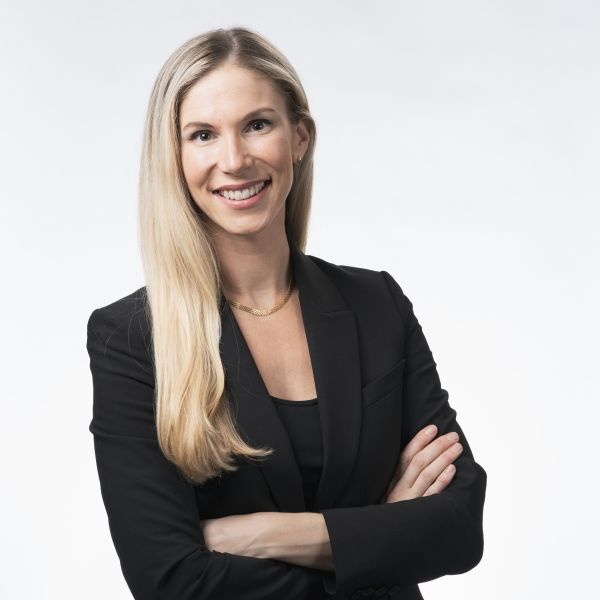
Dr. Kim Schlam
Prosthodontist · Spear Education Faculty
Dr. Kim Schlam is a prosthodontist in private practice and a member of the Spear Education Faculty. Her work focuses on advanced restorative dentistry, digital workflows, implant prosthetics, interdisciplinary treatment planning, esthetics, and complex oral rehabilitation.
Learn with Elevated GP
Dr. Melissa Seibert
DMD, MS, FAGD, ABGD
Dr. Melissa Seibert is the creator and host of the Dental Digest Podcast, a clinical dental podcast dedicated to helping dentists stay on the cutting edge of evidence-based dentistry. She is a clinician, educator, speaker, and founder of Elevated GP, a virtual study club and advanced education community for general dentists who want to become exceptional comprehensive clinicians.
Publications & SpeakingBuild Better Judgment for Complex Restorative Dentistry
Dental Digest brings you nuanced clinical conversations from leading educators. Elevated GP helps you develop the treatment planning judgment, evidence-based systems, and community support to practice at a higher level.
Explore Elevated GPStudies & Resources
- Feine, J. S., et al. The McGill consensus statement on overdentures. Mandibular two-implant overdentures as first choice standard of care for edentulous patients. International Journal of Oral & Maxillofacial Implants. PubMed PMID: 12164236
- Thomason, J. M., et al. Two implant retained overdentures: a review of the literature supporting the McGill and York consensus statements. Journal of Dentistry. PubMed PMID: 21911034
- Prosthetic complications of implant-supported complete arch prostheses: An umbrella review of systematic reviews. Journal of Prosthetic Dentistry. PubMed PMID: 41927400
- Complications of screw- and cement-retained implant-supported full-arch restorations: a systematic review and meta-analysis. PubMed PMID: 32186285
- Carneiro Pereira, A. L., et al. Techniques to improve the accuracy of complete arch implant intraoral digital scans: A systematic review. Journal of Prosthetic Dentistry. PubMed PMID: 34756427
- Takeuchi, K., et al. Infrequent denture cleaning increased the risk of pneumonia among community-dwelling older adults: A population-based cross-sectional study. Scientific Reports. PubMed PMID: 31551442
- How often should implant-supported full-arch dental prostheses be removed for supportive peri-implant care to maintain peri-implant health? A systematic review. International Journal of Oral Implantology. PubMed Search
Full Episode Transcript
Dr. Melissa Seibert: If you've been listening to this podcast for a while, you've probably noticed that I very rarely include ads, and that's intentional. I never want to interrupt your listening experience with a bunch of promotions. But more importantly, I don't want to recommend anything I don't personally believe in or use myself just to make a few bucks.
That said, there is something I do want to share with you because I created it. It's Elevated GP. This is my own educational platform, and the mission behind it is simple, to empower super general dentists.
Dentists like you who want to stay sharp, practice at a high level, and stay grounded in evidence-based care. Inside Elevated GP, we dive into topics like modern caries management, composite techniques, material science, implant workflows, and more.
We meet live once a month for a collaborative session, and you'll get access to our growing course library, all the session recordings, and a vibrant group chat filled with like-minded dentists.
So if you're looking for an easy way to stay on the cutting edge and grow as a clinician, check out TheElevatedGP.com. Again, that's TheElevatedGP.com. I've also included a link to it in the show notes. It's something I'm deeply proud of, and I'd love for you to be a part of it.
Hey everyone, before we dive into today's episode, I want to take a quick moment to talk to you about Net32, the ultimate online platform for dental professionals.
If you're a dentist, dental hygienist, or just someone working in the dental field, you're going to want to hear this. If you're tired of paying premium prices for dental supplies or dealing with the headache of ordering from multiple vendors, Net32 has your back.
It's the largest online marketplace where dental professionals can compare prices on thousands of products from top brands and suppliers all in one place.
The best part? You don't have to be a giant practice to benefit. Whether you're just starting out or running a well-established clinic, Net32 offers competitive pricing and a wide selection of supplies from equipment to consumables.
Plus, their easy-to-use platform lets you track orders, find discounts, and get everything you need delivered right to your door.
And if you're worried about quality, don't be. Net32 only partners with trusted suppliers, so you can rest assured you're getting top-notch products at the best prices.
So if you're ready to save time, save money, and simplify your purchasing process, head over to Net32.com. That's Net32.com, where dental professionals find everything they need in one place.
All right, let's get back to the show.
Hey, welcome to Dental Digest. This is a podcast with the mission of enabling you to stay on the cutting edge of evidence-based dentistry.
I'm your host, Dr. Melissa Seibert. In this episode, we're exploring how digital workflows can streamline your process, enhance communication, and ultimately elevate the level of care you deliver.
We're not just talking about technology. We're talking about precision, predictability, and patient-centered care made possible through thoughtful digital integration.
Joining me is Dr. Kim Schlam. She's a prosthodontist in private practice and a member of the Spear Education Faculty, where she teaches advanced restorative principles to dentists nationwide.
Dr. Schlam brings a refined approach to digital workflows, blending technical excellence with a deep commitment to aesthetics and interdisciplinary care.
By the way, if you've been enjoying these conversations and want to support the podcast, the best thing you can do is subscribe and leave a review on the Apple Podcasts app or Spotify.
It helps us to continue to deliver high-quality evidence-based content that you can trust. And by the way, thank you so much for listening.
Okay, let's jump in.
Dr. Melissa Seibert: We're going to talk a little bit about hybrid restorations, and I want to hear about your workflow. But the first thing I sort of want to put out there, and you and I had a great discussion beside the bar, which is where some of the best discussions happen, and this is my conviction about hybrids, also called All-on-X or implant reconstructions, is that that type of treatment is for a very specific subset of patients.
It is not for every edentulous patient. My conviction is that there's a large industrial complex out there that pushes dentists and labs into hybrids as this lucrative treatment option, and you should be doing this for everybody. I think we're doing a great disservice to patients. I don't think every patient can necessarily afford that. And in some regards, it can be very, very destructive.
Dr. Kim Schlam: Yeah, excellent question. We all know that various things are pushed to all of us, whether it's medicine or dentistry. We look at a little bit of what happened with the opioid crisis and we're far enough out from that, so we can reflect on it. There are even Netflix shows on how did this happen, because it was told to doctors as this perfect solution.
In some regard, we can think of this All-on-X wave as that. I love dental implants. Absolutely love them. That's why I travel and speak about it. I'm passionate about it when used in the right way in the right patient.
The whole concept of this full thing started back as the initial reason we brought implants to the United States. What were implants brought to the United States for? To rid ourselves of this horrible thing that's out there in the world called mandibular edentulism. Literally, that's why we have dental implants.
They didn't come here to replace a single number eight that someone knocked out from a skiing thing. They were brought here to solve something that we know is horrible. Mandibular edentulism, we've decided that human beings can't eat or function or live properly without something attached to their lower jaw.
Again, in the beginning, it was a fixed lower arch. We realized at that time that the same problem didn't exist for a maxilla. If a patient has certain anatomy, a maxillary denture can be an excellent solution.
I did my master's project on quality of life. What does it mean to remove a palatal area of a maxillary denture? I can say with conviction that removing a palate does improve taste and sensation of temperature and all these great things. There are benefits to certain things in the mouth.
I think we need to always go back again: why do we do dentistry? Why are we doing something? Does this make sense for this patient?
What makes me ill about it, to be honest, is this whole push of calling patients arches. The second we call a human being a concept, a solution, then we are changing our brains about that being Susie in the chair.
I'm someone who does have, I say, the fortunate and unfortunate job of doing a lot of fixed implant restorations. But I always talk to patients about all the alternatives because I've done my diligence.
The frustrating part for me is it gets pushed on every provider that they think that now they need to do this treatment. It's just like there are certain clinics that focus on high-end veneers, and they're going to be amazing at it. I don't care if you're a specialist or not. You've put all your time and energy and your passion into learning that thing, and you're going to provide it to the highest level.
The problem with our industry, much like you're mentioning, is all the push has been for people to learn how to do the treatment. There has not been a ton of push on the education for the doctors on how to manage these prosthetics long term.
As a referral-based specialist, I don't get the first round of All-on-X, or whatever you want to call it. I get the second round. So I see patients with failures after five years, after 10 years, after 35 years. I get to see what it does to their temporomandibular joints. I get to see what it does to everything in their dentition, to their swallowing, to their speech, to all these things.
We want to think about the highest level of oral reconstruction, of facial reconstruction. That's what this procedure is.
I don't like to be a brat and say, oh, only certain people should do it. I mean that in the sense that I don't care what your specialty is. I think whoever chooses to do this type of treatment has to be all in. You have to be all in on the proper treatment planning. You have to be all in on the execution.
And oh, by the way, you better honor and know that you are now responsible for helping that patient manage it for the rest of their life. Majority of these large organizations that are doing them, in my opinion, right now need to focus on creating their platform to help those patients in the future.
I've invested in expensive things like the Airflow EMS system to make sure there's no biofilm on those implants in the future. I have set protocols on if I take them off or not. In these follow-ups, I have set protocols on the radiographs that I take in the future. And oh, by the way, what an emergency is for these types of prosthetics, because it's not the same as other dentistry.
But we need to get on the same page as an industry and say, these are not things that we learned in dental school. These are not teeth. They don't behave like teeth. We know that implants fail much quicker than teeth. And oh, by the way, we didn't all learn to be biomechanical engineers, did we? These are very different concepts that we need to think about.
Dr. Melissa Seibert: Preach, you're my favorite person. I mean, I really mean that. I love just being in your light.
I want to make it abundantly clear here too. Neither of us are belittling or speaking ill of any sort of industry specifically that's doing that or any provider. I just think that right now in the dental zeitgeist, this is the hot thing.
The biggest thing is that I feel like really the hallmark of a really good clinician is someone that knows their limits and they know idealized case selection. Maybe the patient comes to you and says, I saw this on TV. I want a hybrid. But maybe it's very much indicated for just an overdenture, something to that effect. I really think the highest practicing practitioner can recognize what is and is not appropriate.
Dr. Kim Schlam: Awesome. I think with that, the treatment planning of edentulism is not just evaluating the teeth. It's evaluating the surrounding gums and bone.
A lot of what's happening is people are taught to do this concept called an FP3: tooth replacement, gum and bone replacement. What boils down to the initial workup and the beauty of overlaying the restorative design with the bone design is saying, hey, where is the disease?
I use this analogy a lot when I'm teaching. We don't just see a patient and decide, oh, they have an injured ankle. Let's chop off the knee. Let's focus on where the disease is. Because if we can chop off at the ankle, that makes much more sense for our patients.
It depends on where their smile line is and all these things. We offer all options at my practice. We do a lot of bar removable prostheses and a big variation.
I also remind people that the differences between teeth and implants are real. There is some value in certain cases that your teeth with the mechanoreception, proprioception, all these very intricate things that most of us don't completely understand, have a connection to the brain that's different.
That's where I'm gaming out right now in my mind, because I get to see these things fail over time, of what materials actually make sense. If we remove all that sensation to our brain, where's the weakest link? Where's the weakest link in our prosthetic?
Going back to this whole concept, I say all the time, I have mixed feelings about it all because I don't think any of us dentists wake up and say, oh, I want to take away that bone or I want to harm this patient. We just don't get it yet because we haven't seen enough failures.
In my field, I see all the failures. I am the person that gets referred the patient with the complications of the implants. I get to see them fail and I get to see the wins. Some of them are amazing and life-changing. That's why a lot of dentists say, I want to learn this. Because to me, dentures are hard.
What clinician now focuses a lot on just doing amazing, beautiful dentures? It's almost getting eliminated from dental schools. That's another reason why we're not good at it or why we all have a push to do this. We think it's lucrative. We think it's a quick and easy solution. But oh, by the way, God forbid we have to work with a denture.
Dentures can be beautifully well used if managed correctly, or strategic implants used for strategic things. I think what these organizations need to focus on is the long impact of what some of these things are doing.
It becomes very quick and easy to say, yep, I'm going to just do this treatment solution, but fully understanding the long-term impact of them, that's where I think the future needs to lie.
Dr. Melissa Seibert: Hey, I want to welcome you to Elevated GP. This is a brand new platform that includes modern evidence-based on-demand courses for GPs and access to Journal Club. Journal Club is a once-monthly virtual study club, where we're going to talk about hot topics in dentistry. To get registered, go to TheElevatedGP.com to join. I hope to see you there.
Dr. Melissa Seibert: Okay. I have two convictions here. This episode was brought to you by the word conviction. I want to hear your thoughts on this though.
Oftentimes, a patient will come in with an ill-fitting denture or a denture that they're not happy with. The first response might be, well, let's just connect it to some implants. My opinion at this period in time is that we should first go back and make sure that was the most idealized prosthesis. We want to get it as idealized first before we connect it to implants.
Dr. Kim Schlam: A hundred percent. I think a lot of it is someone brings us old prosthesis where the teeth are in the wrong place. Again, not judging anybody. It somehow happened.
Oftentimes the patients will get something from the dentist and not go back and not get it relined. They don't always listen to us when we say a denture probably needs to be relined every three years. And oh, by the way, the denture might need to be replaced every five years.
There are reasons that we have these discussions from the American College of Prosthodontists saying, oh, by the way, this isn't a one-time thing. Patients might come back and say, oh, this denture is terrible. I've had it for 20 years. Well, yeah, because you didn't manage the prosthetic well.
Yes, getting back to having the most ideal setup, because you're going to plan your entire surgery off of that. Anytime I have a patient, I get them into a more idealized setup. Say you're doing a maxillary denture, I get them in that.
Sometimes they're like, actually, this is amazing. I don't need to go through and have zygomas now or whatever it is. I'm actually pretty satisfied and I can work with this.
Or they might say, you know what? No, I've decided I want to feel my palatal architecture in my mouth. And again, we say, okay, that's an important value for you. Maybe we consider an overdenture or we consider a fixed prosthesis.
The materials are different with a conventional denture than a fixed. There are things that we can offer with a fixed prosthesis that we can't with removable sometimes. I think all these materials are starting to change and blend the more we start printing, but it's an interesting thing.
I think you're a hundred percent right. We have to get the correct restoration in there first, get them back to the reality of what a well-made denture could be, and then have that discussion.
Dr. Melissa Seibert: I think maybe in general, and I mean, I'm really even speaking for myself here, I don't think I'm as good at this. I think maybe we don't always recognize enough that dentures require ongoing maintenance. It's never really a one and done.
For me, my original mentality was we made you the denture, why are you back? I think that perhaps came from dental school. It's not my dental school's fault. It's my inability to ask better questions. But the typical model in dental school is that you need X amount of arches to graduate. So just get those darn arches done.
But then we don't always realize that these are patients we're going to be following for the rest of their lives. As a profession, we're really good about recognizing that we typically follow fixed dentition for the rest of life, but not so much removable dentition. The other thing I'll say too is, yeah, we understand we need to see these patients back for oral cancer screenings, but we absolutely need to be seeing these patients back for relines and potential redos.
Dr. Kim Schlam: Yeah. My whole team is on board with this. We call it our one-year check-in. Every year with every patient that I touch, we have them come back. I might send them back. I don't have a hygienist, so they do go back to their general provider and get continued care unless they're fully edentulous or implants. I clean them with the Airflow Max in my office. I do it.
We need to see them back and we have a whole process set up. I'm not going to take credit for this. This was Bill Schmidt and John Petrini up in Seattle, the amazing prosth practice that had been there for over 35 years. I got to work there and I learned this process.
It's a discussion with the patients from the very beginning. Just like this whole concept of, oh, I just want to get all my teeth taken out and put implants in. It starts on that very first discussion. Oh, well, just so you know, this needs maintenance.
We're not just taking a Honda Civic and putting it in your mouth. We're giving you a Ferrari. And oh, by the way, Ferraris require a little more maintenance sometimes than a Honda Civic. Or it's more expensive maintenance or however you want to say it. I don't like to tell patients they have a car in their mouth, but people can visualize some of these discussions.
We have that conversation. We say, look, the important part about making this removable appliance for you right now is that you have a set amount of bone. We know that bone in your mouth is going to change for the rest of your life. You have some control on how much that bone changes.
If you have a denture that moves a whole lot in your mouth, that's going to relate to your brain and your body that it's inflammation. What happens with inflammation? Your body pulls away and shrinks away from it. It sees it as something that's not good.
What we mean by that is you need a well-fitting denture to not cause future bone loss. So that gets them thinking.
And I say, okay, we're going to give you this today and it might fit really well, but if you don't come back and get it relined or fit really well to your mouth and you wear something that's moving around a whole lot, despite throwing a bunch of adhesive in there, if that's not fitting well, it's going to make the future prosthetic that you might want to get later not fit well either. You're just going to keep losing something that we can't get back.
That gets them coming back and showing the value of that one-year check-in.
The beauty of it is that one-year and two-year and sometimes three-year, I check for stability and retention of the prosthetic that I make. I show them how much tooth form is actually left on the denture. I say, look, we still have a lot of tooth left here. Your fit is actually pretty darn good.
I show them the PIP bases. You see, this is a good fit. You can tell, right? Oh yeah. I'm not using adhesive. Excellent. That's a great fit.
You're doing really well. We're going to see you next year. We're going to check on that same fit for you. And oh, by the way, we clean it for them that day when they come in. I take them to the lab and look for any microfractures, all these things, but that gets them valuing that one-year check-in.
They say, oh, she's got a lab there. She's going to go look at it and make sure there's nothing wrong with it. And she's going to check my mouth and all these really important things.
Then you get to remind the patient of the home care that they're doing. Proper cleaning protocol, we know that these patients can get pneumonia if the denture is not cleaned well. There are all these things, especially treating some of the elderly patients, that again, a lot of them are now experiencing dementia. We might need to change who at home is helping them do this.
That's another way to once a year recap and say, oh, how did Susie act in the chair this day versus a year ago? Oh, Susie's health is kind of declining. We need to have a different discussion or X, Y, and Z.
I really believe that removable appliances actually need the most follow-up because people say, oh, well, I wear mine at night or I don't wear mine at night. That's a whole other discussion.
I started having my patients wear their dentures at night, particularly those with sleep apnea. You think about it, you take a removable appliance out and their airway collapses even more.
This whole concept of no, you can't wear your dentures at night. No, you can wear your dentures at night. You need to strategically clean them with the right cleaning solutions. Oh, by the way, you need to leave it out for a certain period of time in your mouth, just like taking your shoes off, but that doesn't mean you have to sleep without it.
There are various ways that we discuss with our patients, what type of CPAP machine masks that they have, this whole song and dance. But that's treating the whole patient. That's rehabilitation. That's not just here, take this prosthetic and run with it.
Dr. Melissa Seibert: There's so much to break down here. I just want to leave time. Gosh.
I really appreciate that you have a philosophy that if you're placing the overdenture, you're also the one maintaining it. I think a little bit of the problem, generally speaking, is that with institutions that solely do implant reconstructions and hybrids, they're not always also the ones following these patients.
Now I can also say there is some virtue in institutions that only do that because they then have the opportunity to become very good at that. However, there are very specific ways in which these patients are followed and ways in which these are maintained. I think if you treat the patient, do this multi five-figure, maybe even six-figure reconstruction, and then punt the patient a couple of years down the road, they might not be in a good position.
Dr. Kim Schlam: Yeah, I think you're totally right. And part of it is, again, as practicing clinicians, I say the word practicing because we're all in it, doesn't matter how long we've been in our careers, we don't always have all the time.
We need to teach our team members how to do some of this stuff, how to have those same words come out of my mouth come out of their mouths, how to take care of this and systematize it so that it's on your website, it's on handouts, we verbally say it, all this.
I'm actually working on a project. If you're interested, I'm trying to create some of this training algorithms and processes for the staff members, not just us dentists. We need to get everybody on board.
You can imagine one of my patients shows up down in Florida at a practice. But those team members, the hygienist, maybe or everybody down there said, oh, this is a full arch fixed prosthesis. I know how we're going to help this patient manage it. I've gone to these courses and now I understand what it takes to take on this person as a new patient, because we need to help them manage that.
If we make it a bigger picture, everybody's educated. This is this type of prosthetic. How are we going to take this on forever, no matter what practice they end up in? Because we know people move, people leave.
With that, another gift that we give to our implant patients is we register every implant in a cloud-based software. We can do that, but there are lots of versions. If it's a Straumann implant, it's stored in the Straumann registry, which is a cloud-based service.
It starts with the surgeon scanning the parts at the time of surgery, because that's another huge thing I deal with in my practice every week. I have someone show up and say, I don't know what that implant is. I don't know where I had it done. I don't even remember the state.
And I'm like, oh, that's so weird. You have amnesia from the dental experience. But they didn't have fun there, so they don't want to remember it. But we need to know what these parts and pieces are in their future.
Certain countries like Finland have a national registry of implants. We don't have that here, but I think it's our professional responsibility. So we use the ID2 system. If it's a non-Straumann implant and we track all the implant parts and pieces that I put in the mouth so that if this patient, particularly a young patient, and they move about every five years, they can take that with them. And now they're empowered with this online portal to repair their implants in the future.
Dr. Melissa Seibert: Tell me a little bit about your project. Are you creating universal guidelines for how to maintain hybrids?
Dr. Kim Schlam: I wish I had the power to do that. I'm just starting this think tank of really cool people that I know that manage really complex prosthetics. Some good friends of mine and I've trained with amazing people, and now they're in cool institutions, and other people who own their own practices.
We're starting to say, how are we managing these patients and how are we getting that information to them? By the way, how are we teaching our team members to do it?
How would we maybe create some sort of way, some sort of channel, maybe a virtual platform where people can watch this online? Spear has a lot of online education stuff that is similar that helps train team members, but I'm talking like a different way that we train team members to understand the prosthetics in a way that we do.
Again, they didn't go to 11 years of school like I did. So they can understand what those prosthetics are and then how to help the patient take care of them every day, the products that we recommend, and how to have these check-ins and what that looks like.
Dr. Melissa Seibert: Phenomenal. This has been so much fun. Any time that I get to hang out with you is a good day. Do you have any closing remarks?
Dr. Kim Schlam: Yeah, I think what I close every lecture of mine with, and we're fully on board with this. Again, such a pleasure and true honor to be represented in this way with your podcast. I know you have a bazillion listeners and I hope they take some gems away and reach out to me on Instagram so that I can share more about what I love.
How I recap every lecture of mine is that we are taking on very complex stuff. The way I see my practice, the reason I did a startup and did these things, is because I wanted to create a different way to do this.
I consider our practice a center for rehabilitation. Bend Prosthodontics is where you come and you get rehabilitated. You don't just get replacement teeth parts and pieces. We take you as a human, we figure out your goals, your dreams, and we help you to socialize again. We help you to speak again. We help you to strategically eat foods along the way so that you're still a human.
It's not replacement. It's rehabilitation. That's my closing remarks.