Digital Workflows, SmileCloud, and Restorative-Driven Implant Planning with Dr. Kim Schlam
How intraoral scanning, 3D printing, photogrammetry, co-discovery, SmileCloud, and cloud-based collaboration can streamline complex restorative and implant dentistry.
Digital Dentistry Is Not the Goal. Better Diagnosis, Communication, and Execution Are the Goal.
The most valuable digital tools are not the flashiest ones. They are the tools that help clinicians diagnose more clearly, communicate more efficiently, delegate intelligently, and align the restorative, surgical, laboratory, and patient perspectives before treatment begins.
In this episode of the Dental Digest Podcast, Dr. Melissa Seibert speaks with Dr. Kim Schlam about the practical role of digital workflows in prosthodontics and interdisciplinary restorative care.
The conversation is not a simplistic “digital is better than analog” discussion. Dr. Schlam emphasizes that technology is a tool. The clinician still needs treatment planning skill, restorative judgment, analog fundamentals, and an understanding of when a digital workflow actually improves the patient experience or practice efficiency.
The episode covers intraoral scanning, full-arch implant workflows, photogrammetry, in-office printing, SmileCloud, 2D-to-3D smile design, co-discovery, restorative-driven surgical planning, cloud-based collaboration, and the importance of having the restorative dentist, surgeon, and technician align before treatment begins.
How Digital Workflows Improve Prosthodontic Treatment Planning
Technology Is a Tool, Not a Moral Hierarchy
Dr. Schlam begins by addressing a common anxiety among dentists: “If I do not have digital technology, am I practicing inferior dentistry?” Her answer is nuanced. Technology does not replace clinical judgment. Dentists can still practice excellent dentistry with analog workflows when the fundamentals are sound.
The better question is whether a particular digital tool solves a real problem in your practice. In Dr. Schlam’s case, intraoral scanning, photogrammetry, and in-office 3D printing improved efficiency, reduced analog bottlenecks, improved data capture, and allowed her team to delegate workflows more effectively.
Intraoral Scanning as the Daily Digital Foundation
Intraoral scanning is the foundational digital tool in Dr. Schlam’s practice. She uses it to capture initial records, track patients over time, support crown and bridge dentistry, and manage full-arch implant workflows. For many practices, this is the digital entry point with the clearest day-to-day utility.
The value is not only impression replacement. A scan creates a visual object that can be used for diagnosis, patient communication, documentation, laboratory communication, and longitudinal comparison.
Photogrammetry and Full-Arch Implant Efficiency
For full-arch implant dentistry, Dr. Schlam describes how photogrammetry has reduced the time and complexity associated with implant impressions. Rather than relying heavily on traditional impression copings and pattern resin, photogrammetry can help capture implant positions in a digital workflow with improved efficiency.
This is especially relevant in complex implant prosthodontics, where small errors can compound across the arch. Full-arch implant impressions remain one of the more demanding areas of digital dentistry, so the technology must be used deliberately and verified clinically.
In-Office Printing for Provisionalization and Phase One Treatment
Dr. Schlam uses in-office printing primarily for provisional and phase-one restorations, including full-arch implant provisionals and occlusal appliances. This allows the practice to control early treatment phases internally while still collaborating with highly skilled technicians for definitive ceramics and more complex final restorative work.
Her approach is a useful reminder that digital dentistry does not require the dentist to do everything alone. The most mature workflow is often hybrid: in-office control where it improves care and efficiency, laboratory partnership where technical artistry and material selection matter most.
Co-Discovery and Co-Treatment
The episode then turns toward communication. Dr. Schlam describes co-discovery as a process where the patient begins to understand their own clinical condition through visual tools. Full-face photography, intraoral scans on a large screen, exam callouts, and guided conversation help the patient ask better questions and participate more meaningfully in decision-making.
Dr. Seibert also discusses the related idea of co-treatment: using intraoral photos, scans, and step-by-step visuals during procedures to help patients understand what is being done and why. These visual systems can make dentistry feel less mysterious and more collaborative.
SmileCloud as a Case Communication Platform
Dr. Schlam describes SmileCloud as a cloud-based communication and smile design platform. It allows clinicians to store photos, scans, PDFs, CBCT-related files, and treatment planning records in one shared space. It also provides a chat environment where restorative dentists, surgeons, orthodontists, periodontists, and technicians can communicate around a case.
In her workflow, SmileCloud is not simply a cosmetic preview tool. It is a case organization and interdisciplinary communication system. The patient-facing 2D smile design is used as a discussion point, not a promise. It helps the patient visualize possibilities while preserving clinical honesty about what may or may not be achievable.
Restorative-Driven Implant Planning Requires Collaboration
The most important implant planning section of the episode centers on the division of responsibility between the restorative dentist, surgeon, and technician. Dr. Schlam approves the restorative design and works with the technician first to clarify the desired outcome. The surgeon is then brought into the discussion to evaluate what is surgically feasible.
This creates a productive tension: the restorative dentist advocates for tooth position and prosthetic design, while the surgeon advocates for native bone, access, surgical safety, and long-term biologic predictability. The result is not unilateral control, but collaborative planning.
Clinical Takeaways
- Digital tools do not replace clinical fundamentals: Analog knowledge, treatment planning skill, and restorative judgment remain the foundation of excellent dentistry.
- Intraoral scanning is a high-value digital entry point: It supports initial records, crown and bridge dentistry, patient communication, and longitudinal tracking.
- Photogrammetry can improve full-arch implant workflows: It may reduce the time and complexity of full-arch implant impressions when used appropriately.
- In-office printing can strengthen provisional workflows: Printed provisionals and appliances allow the practice to manage early treatment phases more efficiently.
- Co-discovery helps patients understand their own condition: Visual tools can help patients ask better questions and participate more meaningfully in treatment decisions.
- SmileCloud can function as a collaborative case hub: Photos, scans, files, smile designs, and interdisciplinary communication can live in one shared environment.
- Restorative-driven implant planning requires dialogue: The restorative dentist, surgeon, and technician should align on the desired outcome before guides are finalized or treatment begins.
Key Questions This Episode Helps Answer
Do dentists need digital technology to practice excellent dentistry?
No. Digital technology is a tool, not a substitute for diagnosis, treatment planning, communication, and clinical execution. The best technologies solve specific workflow problems.
What digital tools does Dr. Kim Schlam use most often?
She discusses intraoral scanning, photogrammetry, in-office 3D printing, full-face photography, SmileCloud, and cloud-based collaboration with technicians and surgeons.
How can intraoral scanning improve patient communication?
A scan allows patients to see their own dentition on a screen, connect clinical findings with visual evidence, and better understand caries, wear, crowding, and restorative needs.
What is co-discovery in dentistry?
Co-discovery is a patient-centered communication process where visual tools and guided dialogue help the patient recognize clinical findings and participate in treatment decisions.
How does SmileCloud help with interdisciplinary treatment planning?
SmileCloud allows clinicians and technicians to organize photos, scans, files, smile designs, and communication in a shared cloud-based environment.
Who determines implant position in a restorative-driven workflow?
Implant position should be determined collaboratively. The restorative dentist defines the ideal prosthetic outcome, the surgeon evaluates biologic and surgical feasibility, and the technician helps translate the plan into guides and restorations.
Chapters & Timestamps
| Timestamp | Topic Covered in Episode |
|---|---|
| [00:00] | Elevated GP and Net32 Introductions |
| [03:30] | Introduction to Dr. Kim Schlam and Digital Workflows |
| [05:30] | Technology as a Tool, Not a Replacement for Fundamentals |
| [09:00] | Intraoral Scanning, Crown and Bridge, and Full-Arch Implant Workflows |
| [13:00] | Photogrammetry and In-Office Printing |
| [18:00] | Delegation, Technology Roles, and Team-Based Efficiency |
| [24:00] | Co-Discovery, Patient Communication, and Visual Diagnosis |
| [31:00] | SmileCloud, Cloud-Based Collaboration, and Digital Smile Design |
| [41:00] | Virtual Patient Data, CBCT Alignment, and Facially Driven Planning |
| [50:00] | Restorative-Driven Implant Planning with the Surgeon and Technician |
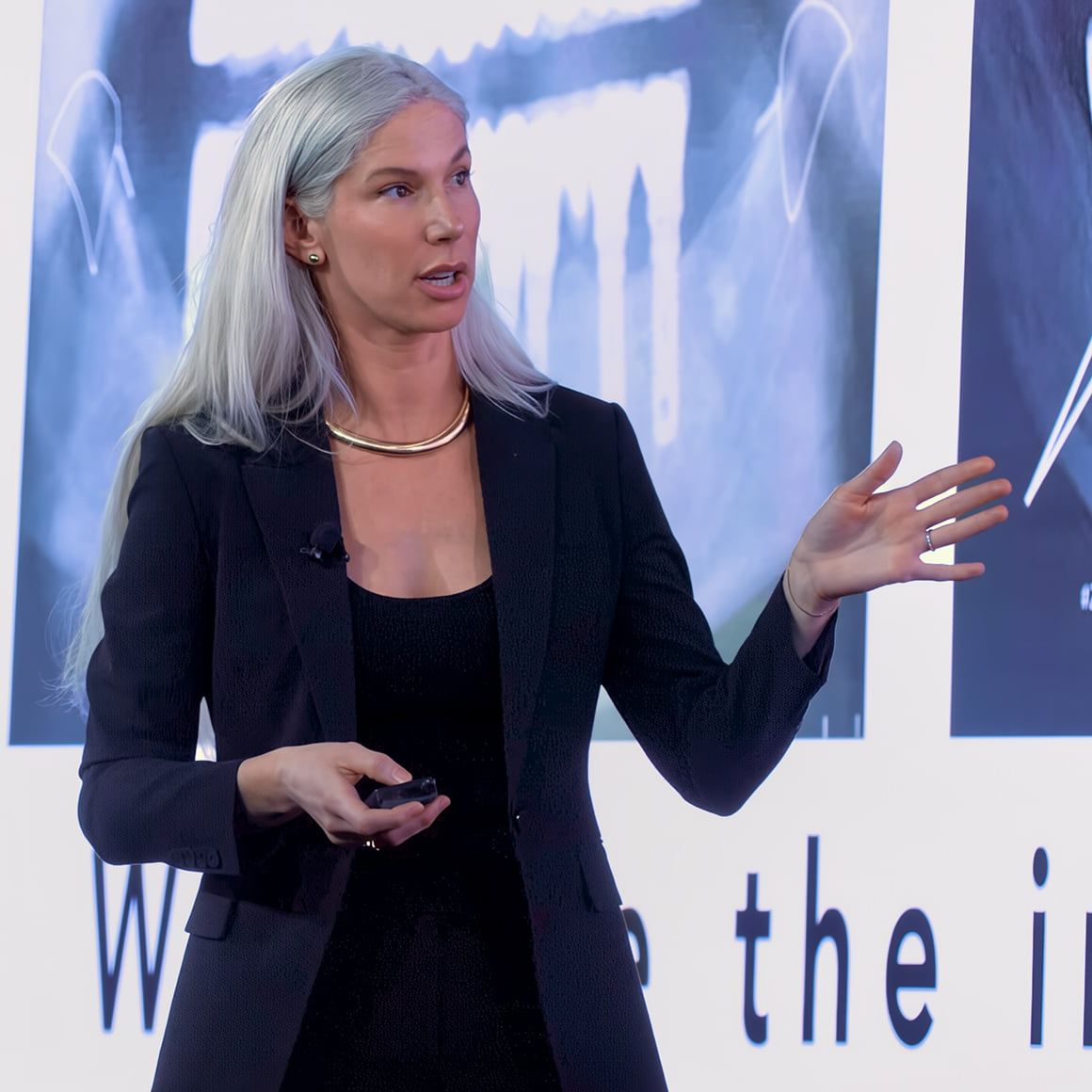
Dr. Kim Schlam
Prosthodontist · Spear Education Faculty
Dr. Kim Schlam is a prosthodontist in private practice and a member of the Spear Education Faculty. Her work focuses on advanced restorative dentistry, digital workflows, implant prosthetics, interdisciplinary treatment planning, esthetics, and complex oral rehabilitation.
Learn with Elevated GP
Dr. Melissa Seibert
DMD, MS, FAGD, ABGD
Dr. Melissa Seibert is the creator and host of the Dental Digest Podcast, a clinical dental podcast dedicated to helping dentists stay on the cutting edge of evidence-based dentistry. She is a clinician, educator, speaker, and founder of Elevated GP, a virtual study club and advanced education community for general dentists who want to become exceptional comprehensive clinicians.
Publications & SpeakingBuild the Judgment Behind Modern Comprehensive Dentistry
Dental Digest introduces you to the ideas shaping modern dentistry. Elevated GP helps you turn those ideas into clinical judgment through live CE, case-based mentorship, on-demand education, and a community of dentists committed to evidence-based excellence.
Explore Elevated GPStudies & Resources
- Chochlidakis, K. M., Papaspyridakos, P., Geminiani, A., Chen, C. J., Feng, I. J., & Ercoli, C. Accuracy of Digital Impressions in Fixed Prosthodontics: A Systematic Review of Clinical Studies. Journal of Prosthetic Dentistry. PubMed PMID: 32069344
- Accuracy of digital implant impressions in clinical studies: A systematic review. PubMed PMID: 35527511
- The accuracy of conventional versus digital impression techniques in full-arch implant-supported prostheses: A systematic review. PubMed Search
- The flexural strength of 3D-printed provisional restorations fabricated with different resins: A systematic review and meta-analysis. PubMed PMID: 38200473
- The Recent Use, Patient Satisfaction, and Advancement in Digital Smile Designing: A Systematic Review. PubMed PMID: 39022468
- A virtual patient concept for esthetic and functional rehabilitation in a fully digital workflow. PubMed PMID: 34931776
- Dynamic Documentation of the Smile and the 2D/3D Digital Smile Design Process. PubMed PMID: 28196157
- Accuracy of implant placement with computer-aided static, dynamic, and robot-assisted surgery: A systematic review and meta-analysis of clinical trials. PubMed Search
Full Episode Transcript
Dr. Melissa Seibert: If you've been listening to this podcast for a while, you've probably noticed that I very rarely include ads, and that's intentional. I never want to interrupt your listening experience with a bunch of promotions. But more importantly, I don't want to recommend anything I don't personally believe in or use myself just to make a few bucks.
That said, there is something I do want to share with you because I created it. It's Elevated GP. This is my own educational platform, and the mission behind it is simple, to empower super general dentists.
Dentists like you who want to stay sharp, practice at a high level, and stay grounded in evidence-based care. Inside Elevated GP, we dive into topics like modern caries management, composite techniques, material science, implant workflows, and more.
We meet live once a month for a collaborative session, and you'll get access to our growing course library, all the session recordings, and a vibrant group chat filled with like-minded dentists.
So if you're looking for an easy way to stay on the cutting edge and grow as a clinician, check out theelevatedgp.com. Again, that's theelevatedgp.com. I've also included a link to it in the show notes. It's something I'm deeply proud of, and I'd love for you to be a part of it.
Hey everyone, before we dive into today's episode, I want to take a quick moment to talk to you about Net32, the ultimate online platform for dental professionals.
If you're a dentist, dental hygienist, or just someone working in the dental field, you're going to want to hear this. If you're tired of paying premium prices for dental supplies or dealing with the headache of ordering from multiple vendors, Net32 has your back.
It's the largest online marketplace where dental professionals can compare prices on thousands of products from top brands and suppliers all in one place.
The best part? You don't have to be a giant practice to benefit. Whether you're just starting out or running a well-established clinic, Net32 offers competitive pricing and a wide selection of supplies from equipment to consumables.
Plus, their easy-to-use platform lets you track orders, find discounts, and get everything you need delivered right to your door.
And if you're worried about quality, don't be. Net32 only partners with trusted suppliers, so you can rest assured you're getting top-notch products at the best prices.
So if you're ready to save time, save money, and simplify your purchasing process, head over to Net32.com. That's Net32.com where dental professionals find everything they need in one place.
All right, let's get back to the show.
Hey, welcome to Dental Digest. This is a podcast with the mission of enabling you to stay on the cutting edge of evidence-based dentistry.
I'm your host, Dr. Melissa Seibert. In this episode, we're exploring how digital workflows can streamline your process, enhance communication, and ultimately elevate the level of care you deliver.
We're not just talking about technology. We're talking about precision, predictability, and patient-centered care made possible through thoughtful digital integration.
Joining me is Dr. Kim Schlam. She's a prosthodontist in private practice and a member of the Spear Education Faculty, where she teaches advanced restorative principles to dentists nationwide.
Dr. Schlam brings a refined approach to digital workflows, blending technical excellence with a deep commitment to aesthetics and interdisciplinary care.
By the way, if you've been enjoying these conversations and want to support the podcast, the best thing you can do is subscribe and leave a review on the Apple Podcasts app or Spotify. It helps us to continue to deliver high-quality evidence-based content that you can trust.
And by the way, thank you so much for listening. Okay, let's jump in.
Dr. Melissa Seibert: You're a prosthodontist. You implement digital workflows in your practice a lot, but so often dentists will feel like, I don't have digital armamentarium in my office. Am I practicing inferior dentistry? What would you say to them?
Dr. Kim Schlam: Yeah, I think that's such an incredible question because it becomes overwhelming sometimes. We see all these new amazing things pop up on our social feeds, and we have colleagues that are buying this or that, or again, they attend lectures and see these things.
The number one thing to remember is that all technology is a tool, right? We learned analog techniques. We know the dentistry. We know treatment planning. That's the core. So whatever tools you decide to incorporate into your practice is a decision.
What I help people do is I love to go back to Marie Kondo. She has this great saying that keep the things in your life that you love and only the things in your life that you love. The reason I chose technology is because I didn't love working with stone in many cases anymore. I wanted to do it differently.
With that, I've incorporated certain technology and certain team members to help me delegate some of the use of that technology.
Dr. Melissa Seibert: Okay. What is the technology that you're using that has actually improved your practice and that you're seeing a return on investment on?
Dr. Kim Schlam: Yeah. Great question with that. I think the intraoral scanning, I can say without a doubt, is a piece of equipment that I use every single day.
I use it just for capturing initial models, right? We're all required to have an initial representation of what a patient looks like. That's step one. So no more doing alginates in our practice or making impressions that way. We capture initial data and we can track that patient over time.
The next thing I use it for is I use it for crown and bridge. I use it for full arch implant dentistry. And so my intraoral scans are paramount.
We've also incorporated the photogrammetry aspect. So we've replaced using GC pattern resin and old-style impression copings with now, I would say, cutting it back using a fifth of the amount of time it used to take me to do implant impressions. So that's another huge key.
And then having our in-house printer, because I do almost all of the provisionalization or phase one of my treatment, I fabricate those restorations. So when it comes into definitives and the ceramics, I don't make those myself. I work with a very skilled group of technicians, but I love the ability to manage the first phase of treatment in my office.
A printer is not something that I expected to have. I actually didn't like the first types of printers. I had them when I was in the military and all these things, and they were cumbersome and messy and smelly.
Now it's about the size of a microwave and it sits on my countertop, and I don't manage the printer. My team manages it. So it's very simple to use and excellent return on investment because I'm using it for everything from printing full arch implant restorations to making occlusal appliances on a day-to-day basis.
Dr. Melissa Seibert: When you're printing those full arch implant restorations, is this the provisional or is this the permanent? I'm guessing the provisional.
Dr. Kim Schlam: Yeah. Provisional for sure. We can print those in-house. There are some interesting concepts about what definitive materials will look like in the future. And again, we know that's starting to happen for crown and bridge. There are actually various printers that can print definitive crowns.
When I'm treating very young patients for full arch implant restorations, our team is trying to work with some newer materials that can be printed for a lower arch. We still like to do a titanium bar substructure. Again, I outsource that, but there are concepts of using a different material that has some sort of wear capability. So I think that maybe in the future I'll be printing some definitive materials as well.
Dr. Melissa Seibert: Talk to me a little bit about how you outsource this to your team and how that perhaps makes things more efficient and has a good ROI. Because really, I think for the idealized office, everybody should be practicing at their highest capabilities. I say that ideally, but I'm quite controlling and I'm working on that.
Dr. Kim Schlam: Yes. Yeah. I get asked this question a lot because people say to me, how do you do what you do? You can't possibly be doing that.
It's because I'm a mom. I have a four- and a six-year-old. My husband is an oral surgeon, and we both own. He owns part of his practice. I own mine outright. It's a startup.
We are very busy humans, and I still find time to travel and educate and teach. So how do I make that happen? It's exactly the point you're bringing up. Delegating properly.
I used to micromanage all the things in my office, as most of us do. But what I did is I created very important roles for certain team members, and they're non-traditional roles. We have one called the Technology Queen.
It could be a king if we had a male person there. But we have a role. It's a 20-year-old. She wasn't initially in dental. She had a different degree and she said, I like learning new things.
So I put her in this role where she manages all of our equipment. She makes sure it's not broken and makes sure that it's calibrated. The beautiful thing about this technology, if you buy the right technology with the right companies, is you have amazing online support.
I could be in the room prepping teeth, and if the printer is not working, she doesn't come bug me. She immediately calls customer service. Because of the technology, they can remote in to the printer. Just like any computer, you call up Apple and say, I'm having a problem. They remote in. Now you can do that even on a printer.
That's allowed me to delegate in that way. And again, I think like you mentioned, coming up with streamlined workflows. I have a new patient experience, which lends itself to various team members knowing what their role is and being proud of that role.
They're impacting this data collection for the patient, onboarding them as part of our practice family. It becomes fun again because then I'm not so worried about doing every part of the puzzle. Like you mentioned, I'm focusing on my major skill set, which is doing the physical dentistry, treatment planning appropriately.
That's number one: how do we build that connection with the patient, have this co-discovery process of both understanding what's going on with their mouth, but then helping them and guiding them to making the best decisions.
Dr. Melissa Seibert: Can you walk me through what co-discovery actually is? Let's say that you have a high caries risk. How would you walk them through the co-discovery process?
Dr. Kim Schlam: Yeah. So I think this is huge. I've thought about this a lot, even before teaching at Spear. And Spear is really big about the co-discovery process.
I set it up in my office so that I can use certain tools to help patients understand. Because when I first started prosthodontics, I would sit there and explain all of these very in-depth concepts and the patient would look at me and smile and say, oh, okay. You realize after you leave the room, they have a conversation with the assistant and they didn't understand anything that we were trying to explain with these fancy words.
So we need visual tools. We need them to see something and understand. Part of our process is taking full-face photography. With that, like you're talking about, we can discuss collapsed facial form, things of that nature.
As the patient proceeds in our process, they are in our room and every patient gets that scan with our Trios. That gets splashtopped up on a big screen so they can look at it even before I come in the room.
They're building this visual connection of, oh, that's my face and that's my teeth. Before I even start pointing things out, I'm calling off in my exam. So they have a visual representation of their teeth across from their face.
I sit them back and I have this exam process where I'm calling certain things out to my assistant. Then I set them up. With all those visual descriptors around me, I can say, hey, did you hear some of those things I said? They're like, do caries mean cavities? Or you talked about severe wear on a couple of teeth and moderate wear on a couple of teeth. What does that mean?
So before I'm even discussing with them, or rather forcing the conversation with them, they're asking me questions. That's a beautiful part about co-discovery. You're almost leading them to ask the right questions and then they feel empowered because then they truly understand. So yeah. A lot of fun.
Dr. Melissa Seibert: Hey, I want to welcome you to Elevated GP. This is a brand new platform that includes modern evidence-based on-demand courses for GPs and access to Journal Club. Journal Club is a once-monthly virtual study club where we're going to talk about hot topics in dentistry. To get registered, go to theelevatedgp.com to join. I hope to see you there.
Dr. Melissa Seibert: Along that line, I've also become a huge fan of the co-treatment concept. And I think that's underutilized. So I take a lot of intraoral photos of what I'm doing and also scans when that's appropriate.
I show the patient and I walk them through it. I have yet to have a patient that didn't want me to do that or didn't have some kind of interest. I feel like that really perhaps brings them more value and makes them feel like they're very much a part of the decision-making process.
Of course, we have to be reasonable here. I do like to take step-by-step photos of what I'm doing, and I will often use that for educational purposes. Sometimes that's just not practical.
I'm also mindful there are some patients that they really want to get in and get out, and I can respect that. I'm probably that patient. So it's not necessarily for everybody, but I think that's perhaps underutilized.
Dr. Kim Schlam: Yeah, absolutely. Another big part of our process, I mentioned this full-face photography. Again, because I'm a referral-based specialty practice, I have the opportunity to sometimes take things a little bit slower, but we do a full two-hour onboarding exam and we do that full-face photography.
I do also do a SmileCloud workup. So we talked a little bit before about how I delegate and collaboration. That's also how I communicate with my lab teams.
I use SmileCloud for this quick kind of smile design discussion. And again, that's right there with the patient. So that, as you mentioned, they're commenting like, oh yeah, that could potentially be something that we do with my teeth.
It's not a treatment plan. It's a discussion point. It's a co-discovery piece that's visual. And then, yeah, we can put all that in the cloud and share it with anybody we want to collaborate with.
Dr. Melissa Seibert: Tell me all about SmileCloud. What is this and how can it be used?
Dr. Kim Schlam: Yeah. I had the opportunity to actually go to Romania and meet the whole team that helped develop it. Really passionate, incredibly talented clinicians that said, hey, we need a better way to communicate with our labs.
There are people like me that believe in a team-based approach. I'm a specialist. I work with other surgeons, both oral surgeons. I work with periodontists. I work with orthodontists. I work with technicians.
To do that efficiently means you're not calling and texting each other all day long because that's not reality of getting anything efficiently done.
So now we have the primary thing for me with SmileCloud, this cloud-based portal. A lot of these implant companies and various companies are trying to offer a cloud-based portal, because again, you're not sending USB drives of the DICOMs. You're not sending the scans on one device. It's all in one place.
So it allows us to efficiently communicate. That's one of the keys. There's also a little chat box. So again, we don't have these, oh, I called the lab and they said this, or we did this with the oral surgeon. No, it's all one place, one chat box visible to all the teams.
You can add and take away team members, which is also kind of fun. You can't do that on your iPhone or Android, but you can do that here with SmileCloud.
The other key part of it is this co-discovery part, which is the smile design. Like many digital platforms, you can put a full-face photography in there and do a 2D workup. Much like what architects do, they don't start with this 3D mockup. They start with a 2D mockup, a visual discussion piece, and then they turn that into 3D.
That's the cool thing. You can actually mock up a 2D image and eventually use it as a prep design. So that's a really fun way we do it.
Basically, it allows you to visually get on the same page with the patient, communicate back and forth with the lab, put all your files, photos, STLs, PDFs, all in one place. And again, I mentioned, I don't do that myself anymore.
I don't do my own designs. I don't even do my own merging anymore. I put it all in there, add my technician, say, hey, can you please merge all this data for us? And then, oh, by the way, schedule this conversation with me, the surgeon, and the lab so that we can get on the same page.
Then we make our game plan of what's going to happen with the patient. And then I, again, close that loop with the patient.
Dr. Melissa Seibert: There's a lot to unpack there. So, okay. I guess to think very simply about SmileCloud, perhaps we could think of this as something sort of similar to a Google Drive or Dropbox with far more capabilities.
Dr. Kim Schlam: That's a great way to think about it. Yeah. And I do think that all of us will eventually go there in some capacity.
Again, like Dentsply Sirona offers something like this. For me, SmileCloud makes sense because it's open platform. It doesn't matter what company you're working with or anything.
Very inexpensive. So you pay a very minimal monthly fee. It's almost silly how cheap it is. But you do need all team members to have it. So I think everybody being on the same page and saying, we're going to commit to this communication platform.
Again, you dump any files in it. I love it for my teaching and education too, because I'm traveling a lot and I might think, oh, I really want to show something with this case. You don't require a dongle. You don't require a fancy computer.
It's totally web-based. I just type in smilecloud.com and I can pull up any of my patient's records and immediately drop them into a keynote presentation. So it's really powerful in that regard.
It's a phone-based app. It can be on a tablet so you can show the patient. Another fun thing with showing the patient is whatever smile design you can create, it has a little slider tool and you can send that to the patient's phone.
So they can actually bring that discussion that they had home and have it resonate before they see me for the follow-up treatment planning session. They can say to their wife, who might not have been present at that first visit, hey, look what my dentist showed me. Isn't this pretty neat? That just sends home that co-discovery part.
It's really fun. There are so many ways you can incorporate it, but I would say I couldn't have my digital-based practice without this level of organization because every patient we have at my office, all the data gets dumped in there.
So it helps our whole team manage the data because I think data management is going to be our issue in the future. We have a bazillion cool machines and a million ways to save all these different files. And it's like, what the heck do we do with all the files now to keep them organized?
Dr. Melissa Seibert: So let's say you have a patient, they need multiple implants. Their chief concern when they come into your office is that they want a prettier smile. Let's say they have some crowding. This is an interdisciplinary case.
Would you effectively take your scans, your photos, your CBCT, put it all on SmileCloud? And then did I understand correctly? You're then asking your lab technician to overlay all the data.
Dr. Kim Schlam: Exactly. So what I do with that very first patient visit is I again show some of that data to the patient and I come up with a 2D mockup, which is really cool.
It's AI-based in SmileCloud. It creates one for you just with two clicks. I could have a team member do it, but it's something that I like to do because I want to mentally absorb where the patient is before I go in and meet them.
So I do a couple of clicks. I sometimes tweak it a little bit. And then that's in the room before I meet the patient. I have a discussion about this 2D image and I say, is this something of interest to you? And kind of figure out what direction they're interested in going.
Then everything gets sent off to my technician. In a set period of time that we discuss, they send it back to me and say, hey, we're ready for this group discussion.
The powerful thing is it's so easy to create multiple smile designs in there because you can duplicate and have multiple projects. If it's someone like you're mentioning that has other needs, maybe orthognathic surgery, or maybe orthodontics, or some of these bigger-picture things that they came in thinking like, oh, I'm just going to need veneers.
What this quick two-minute mockup does is say, hey, if we did veneers on you, it would look like this. Then they're like, oh, okay, that doesn't solve what I thought it would solve, because they don't know.
We all go around our lives thinking that everybody else knows this level of dentistry, but a visual, a quick visual description will help them grasp that, wow, this is a bigger picture thing than I realized.
Dr. Melissa Seibert: For anybody wondering, and they're wondering, what are we talking about with overlaying data? We're effectively talking about aligning the scans so that it's properly, perfectly aligned with the CBCT.
All the molars match one another, all the centrals, all the incisors, everything matches. And then oftentimes you can then take that data and overlay into the patient's smile, which is really great. This is how you can do facially generated treatment planning.
My question though to you is, if you're able to do this even before your lab has overlaid everything, is that capability just the click of a button where it will do a quick proposal? Is that based on the portrait photo?
Dr. Kim Schlam: Yeah. The initial discussion is where it's not a full treatment planning, right? Because it's not overlaid with the bone at that point. And I'm, again, in the mouth probing and I can get some clinical information.
But this is where SmileCloud, and not just SmileCloud, any smile design software, if used wrong, can be the wrong message for the patient. You don't want to promise them something that they can't have.
This is where smile design has gotten the wrong rap. I don't use it that way in my practice.
I say, here's an AI-generated smile that based on your facial features, this is what AI thinks where the teeth should be in your head. Is this something that even interests you? Because if this interests you, we might have to do X, Y, and Z.
And I say, we don't know. We're going to take this information, the discussion we're having today, and we're going to put it in our virtual planning software.
I relate to medicine a lot. I say, you know, if you're having time to overlap your radiographs with some of this information, that's how we do these robotic guided surgeries for you that are very precise. So we do the same thing in dentistry.
I don't know what we can achieve yet because we have to overlay all this data. But what we're going to do with our team members, and I describe the value of three team members, is we're going to look at this behind the scenes.
Then I bring you back and have this robust discussion of your options. Option one is doing X, Y, and Z surgery. Option two might be only doing crown and bridge. And oh, by the way, these are what these different treatment options will now look like in the face.
That's a way that we turn it back into reality because it can be used incorrectly if it's not overlaid with all the data right away and you're selling something to the patient that's not able to be achieved.
Dr. Melissa Seibert: Within SmileCloud, is there the capability then, did I understand that correctly, to design the case, wax it up? Or do you have to use another software such as Exocad, design it, then bring it back into SmileCloud?
Dr. Kim Schlam: Yeah, it's very cool. The beauty of SmileCloud is yes, you can actually turn the 2D image into a 3D model. It's a process that SmileCloud is working on.
The eventual goal is that that will be available to everybody. I've been working with SmileCloud since it was launched in the United States, so it's a part of the process that's being developed.
But you can take a 2D mockup and, much like anybody's using Exocad, you can export the whole thing right to Exocad. You can get those exact teeth that were created in SmileCloud.
The beauty of SmileCloud, again, discussing with a designer, is that they're not the same mold for everybody. I think that's something that we fight with in the U.S. because in Europe, everybody wants their unique tooth. They are willing to pay a premium for hand-layered, feldspathic, whatever, because we want it to be a unique human.
We sometimes get stuck here where we want big, bright white teeth and everybody wants the same teeth. But I think that's the beauty of SmileCloud. It says, hey, this is a really beautiful, unique smile design just for your face. So everybody gets a unique representation of them.
Dr. Melissa Seibert: And then once your lab technician has all the data, they overlay everything, they're then scheduling the appointment with all parties involved in that patient's care?
Dr. Kim Schlam: Yeah, oftentimes they do. Nowadays, I even have strategic check-in points where I don't even have to be involved.
I am involved because we want to do a restorative-driven surgical plan. I'm involved with the technician first. So me and the technician go back and forth, verify that all the models are merged because again, I'm not doing it initially.
They do a check-off with me, like, does everything look good? Then we discuss, yes, this is what we want to achieve restoratively. Then we tag the surgical team member in.
Sometimes it's my husband. Sometimes it's his other partner. Sometimes it's the other oral surgery group or the perio groups. We tag them in. Then that discussion becomes now about the surgery because we've already decided restoratively, this is ideally what we want.
Then we tag in the surgeons and we start placing implants in coDiagnostiX or whatever software you want to use. We start placing the implants and we might say, ooh, yeah, we're going to have to change our restorative design because the surgeon's telling me, oh, hey, we can't do that without this. Or if we're going to do that, we need to do this. Or we can't have that cantilever, for example, on this implant prosthetic, because I can't achieve that.
If you want to achieve that, we might need a different type of implant. We might need grafting first or go into non-native bone later. All these decision-making parts go into that. Again, I can bring those back to the patient.
After that, we bring it back to the patient. We've had this platform of, we can do these two or three options based on our three team members. Then I discuss that with the patient.
Once the patient is fully aware and makes a decision, then I take it and punt it back to the technician and the surgeon, because I used to micromanage the guide-making process.
Prosthodontists, we like to do that. We say, I'm going to make this guide and the surgeon better use this guide. I need fully guided here or whatever when it comes down to guides.
I've been doing this long enough and I work with my husband, so I get to hear real feedback from surgeons because not everybody gets that. Some of the guides that we give them are very hard to use and will actually result in a worse surgical outcome.
So I stopped micromanaging the surgery. I just say, hey, all three team members, we've all seen a virtual plan. Here's where I need those implants.
Now the surgeon gets to decide, maybe this patient can't open very wide. Maybe a fully guided surgery is not great here. Maybe an out-of-bounds guide would be better, and they're going to use this type of SRA to angle correct or what have you.
Maybe we want to have a fancy guide that we keep a couple of roots and we stabilize the guide that way. So that becomes a discussion again, not with me anymore. It's just the technician and the surgeon.
They get to create whatever amazing guides they want, but guess what? They drop those files of the guides that they designed back into my SmileCloud. I download it and I print them. So I get final verification and check of the guides.
But again, I don't have to be the one that decides anymore if I'm continuously getting the results that I need from my surgeons, which again, I tell them if they don't, that I can support my restorative plan that we discussed with the patient, that I don't need to micromanage that guide design either.
Dr. Melissa Seibert: Let's get a little bit more granular here. And that's really great insight because I really dictate the guide and that's not always ideal. So I just want to make sure I'm understanding division of responsibilities.
You are approving the restorative design, and then who is dictating the exact implant placement? Is it you? Is it the surgeon? Is it a back-and-forth conversation?
Dr. Kim Schlam: Yeah. These are, I make jokes that sometimes it's a funny argument between my husband and I, if it's my husband and I, or any of his partners, because we are usually advocating for the opposite things.
They want to stay in the most native bone and all those things. And I'm trying to say, well, I really want a tooth there. So I don't want to have a cantilever. So we're actually almost arguing in this discussion.
But yeah, it's all three of us on a call, on a usual Zoom call or a phone call, where all three of us are scrolling through with the technician there. Sometimes I laugh because the technician just sits there while the restoring doctor and the surgical provider have this little back and forth. But yeah, all three of us are on it.
Because as you mentioned, that's our responsibility to understand. So that way, the day of surgery, there are just so many fewer questions. I do go to the surgeries and I capture the scans, so I'm there if needed.
But that way, we hash that out ahead of time. And again, I bring that back to the patient before anything is touched in their mouth.
I say, hey, we went back and forth here. I know we wanted to have that additional tooth here. It's just going to take a lot to achieve that. Do you want to go down that road? Or do you want to go through this concept of shortened dental arch that has been well proven with quality of life and all these other things? And I think that this is more predictable.
So those are where I bring it back to the patient and say, here's the two ways we worked this up. What are you most comfortable doing? And here's the timeline and here's the cost of both options.
Dr. Melissa Seibert: So practically speaking, when it comes to deliberating over the implant, you all sort of go back and forth to try to find a happy medium. Does that sound correct?
Dr. Kim Schlam: That's pretty much. Yeah. Because again, I used to say this is the only place for it to go and all that. And sometimes we would do so much grafting and sinus augmentation and block grafts.
I was young in my career at that time. Sometimes I would not even get a much better result. After doing this over time, and again, my surgical people that I work with now are pretty high speed when it comes to understanding the restorative options as well, it becomes a really nice discussion.
Another cool thing with SmileCloud that I didn't mention is, well, I mentioned it briefly, but you can add and take away people. Because I'm a collaborator at heart and I love to get other people's opinions sometimes about these cases, and you have to have the patient's consent, obviously, to share any of their data.
But because I travel and collaborate with people internationally, like through the ITI and whatnot, sometimes there's a very challenging case and I'll send them a message and say, hey, we've worked up these options. I know you've been doing this 10 years longer than me. What do you think here?
That's another really fun way. You don't have to send files in an email or anything. I even started doing that with some of the Spear members to say, hey, send me your information on SmileCloud and I'll take a look and I can give you an opinion.
So it just opens up a better, more vulnerable discussion with other providers because at the end of the day, if we don't share our wins and our losses, none of us are going to get better.