The Silicon Disconnect: Why the Digital Impression Magnifies the Analog Prep
Why preparation quality outweighs every digital variable, the ViscoStat Clear hemostasis workflow that retires routine cord packing, and the zirconia evolution from 2008 to today.
The Fundamentals Decide Every Digital Case
The digital transition in contemporary dental medicine promised an era of frictionless accuracy, offering a world where high-resolution optics and cloud-computed artificial intelligence could transcend human physical error. Yet, the stark reality of clinical data reveals a different landscape: the digital workflow does not cure analog technical compromise—it relentlessly exposes it. A highly advanced intraoral scanner paired with automated margin-detection software cannot salvage a poorly prepared tooth structure.
The ultimate predictability of a CAD/CAM restoration relies entirely on manual technique and fastidious tissue control before the camera even fires. Absolute hemostasis stands as the primary obstacle to data capture. While legacy protocols demanded extensive, tissue-traumatizing cord-packing routines to physically display margins, modern chemical workflows offer a more elegant baseline. Actively scrubbing a 25 percent aluminum chloride hemostatic gel, like ViscoStat Clear, through an infuser tip stops subgingival capillary bleeding instantly—purifying the local environment sufficiently for intraoral scanners to differentiate structural lines without mechanical displacement.
Similarly, the mechanical evolution of milling substrates has quietly removed legacy materials. Zirconia has graduated from the brittle, opaque, chalk-like 3Y structures of 2008 into highly advanced, multi-layered block configurations that blend high-yield fracture resistance with optical translucency. These materials allow general practices to execute high-strength posterior restorations without sacrificing aesthetics. But this advanced chemistry remains downstream of manual execution; the micro-adaptation of the crown is determined by the precision of the bur, not the cost of the scanner.
File Architecture, Deep Tissue Management, and the Zirconia Evolution
In achieving absolute margin integration in a digital system, clinicians must understand how physical tissues interface with software data files. In a comprehensive segment of the Dental Digest Podcast, Dr. Mike Skramstad of Spear Education joins host Dr. Melissa Seibert to evaluate the operator choices that determine whether digital technology creates a superior clinical outcome or introduces hidden procedural risk.
The Silent Vulnerability of File Translation: STL vs. PLY
A common point of operational friction between the clinic and the dental laboratory lives inside the invisible data architecture of the scan file itself. Most practitioners rely on standard STL exports, assuming it represents a comprehensive map of the patient's mouth. However, an STL file is completely colorless and textureless, displaying the tooth as a flat, single-toned virtual stone model.
When an un-corded subgingival margin is exported as an STL file, the laboratory technician cannot accurately distinguish where the tooth ends and the soft tissue begins, leading to errors in boundary delineation. To fix this gap, practitioners should transition to PLY or OBJ data exports, which layer photorealistic color maps and surface textures over the structural geometry. This color depth allows the technician to visually track the margin line clearly, preventing hidden micro-gaps from compromising the final fit.
Linguistic Deprogramming in Centric Relation Capture
Capturing a stable, repeatable centric relation (CR) bite registration has traditionally been one of the most tedious manual tasks in analog prosthodontics. When patients are instructed to simply "bite down" into registration material, neuromuscular memory routinely triggers muscle guarding, leading to jaw translation and inaccurate occlusal records.
Digital workflows simplify this issue by combining deprogramming therapy with rapid data acquisition. By introducing a mechanical leaf gauge to completely relax the lateral pterygoid muscles, clinicians can easily guide the jaw into a repeatable skeletal position. The clinician can then inject rigid bite material to lock the open position, scan the reference orientation, and allow the software to computed-align the arches—achieving precision that traditional analog wax-bites cannot match.
The Laser Illusion in Soft-Tissue Troughing
The introduction of soft-tissue lasers led many practices to believe they could entirely replace traditional retraction cords by using the laser to "trough" out the gingival sulcus around a preparation margin. Dr. Skramstad warns that this automated shortcut introduces several clinical drawbacks. Using a laser to melt away interproximal tissue tags often creates an oversized, irregular trough around the tooth.
During the subsequent delivery phase, this empty space acts like a funnel, allowing fluid luting materials or resin cements to escape deep subgingivally into the tissue spaces where they harden and resist clean removal. Instead of using lasers for routine posterior margin management, their deployment should be reserved for anterior cosmetic gingvoplasty—shaping tissues around provisional restorations where soft-tissue architecture can be gracefully guided over time.
Clinical Takeaways
- Focus on Prep Quality: Recognize that digital impressions do not fix manual errors; clean, uniform margin preparation remains the primary predictor of restoration longevity.
- Control Local Hemostasis: Use a 25 percent aluminum chloride gel with an infuser tip to establish complete hemostasis, reducing the need for double-cord packing in routine posterior scans.
- Audit Your File Formulations: Utilize color-rich PLY data files instead of monochromatic STL formats when communicating subgingival margins to your laboratory technician.
- Deprogram the Neuromuscular Bite: Pair mechanical leaf gauges with digital bite scans to isolate repeatable skeletal centric relation records without muscle guarding.
- Limit Laser Troughing: Restrict soft-tissue laser use to anterior aesthetic recontouring rather than posterior margin management to prevent subgingival cement trapping.
Chapters & Timestamps
| Timestamp | Topic Covered in Episode |
|---|---|
| [00:00] | Team Integration: Managing Systems and Calibrating Quality Protocols with Staff |
| [03:15] | Complex Malocclusions: Troubleshooting Digital Bite Registration Errors via Deprogramming |
| [07:45] | Margin Integrity: Why Manual Preparation Accuracy Dominates Software Algorithms |
| [12:10] | Advanced Hemostasis: Utilizing Aluminum Chloride to Eliminate Routine Cord Packing |
| [17:35] | Data Architecture: Evaluating STL vs. PLY File Exports for Lab Communication Accuracy |
| [21:50] | Soft-Tissue Lasers: Anterior Gingivoplasty Execution vs. the Risks of Posterior Troughing |
| [25:12] | The Zirconia Trajectory: Analyzing the Structural Leap from 3Y Blocks to Multi-Layered Katana |
| [29:40] | Digital Skepticism: Filtering Genuine Innovation from Social Media Practice Noise |
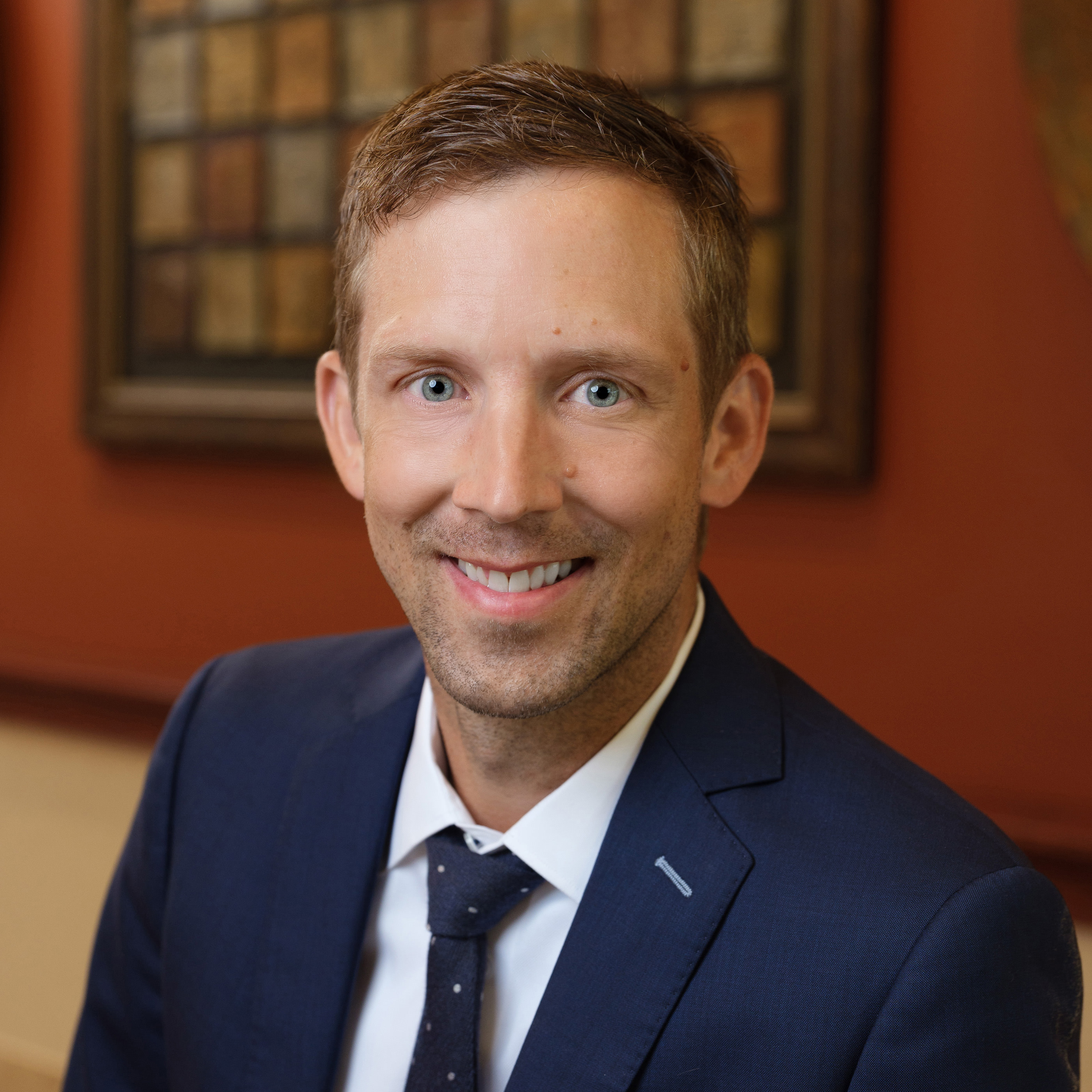
Dr. Mike Skramstad
DDS — Spear Education Faculty · CEREC & CAD/CAM Educator
Dr. Mike Skramstad is one of dentistry's leading voices on digital workflows. A longtime CEREC and CAD/CAM educator, he serves as faculty at Spear Education and is an alpha and beta tester for multiple major dental manufacturers — meaning he has stress-tested most digital systems before they reached the market. His practice in Minnesota functions as a real-world test environment for the technologies he teaches, with an in-house lab and integrated digital workflow that spans implant guides, restorative scanning, and full-arch design. He was also part of the original Glidewell zirconia trials from 2008–2010 and continues to track those cases today.
Spear Education Faculty Profile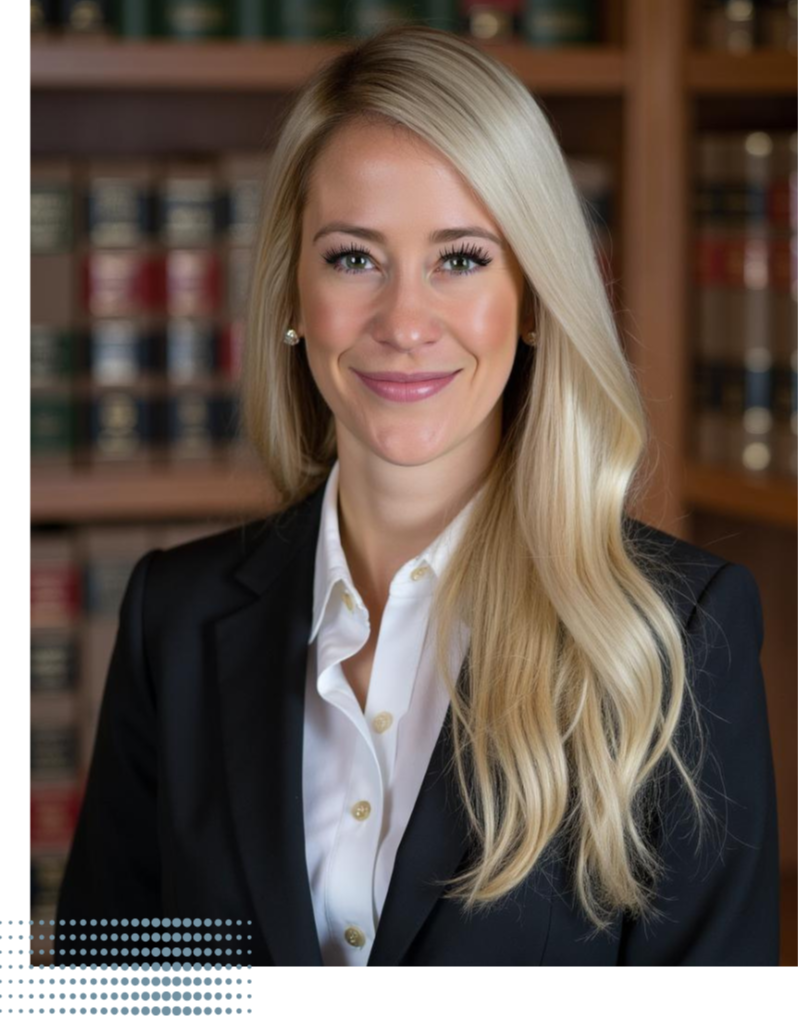
Dr. Melissa Seibert
DMD, MS, FAGD, ABGD
Creator and host of the Dental Digest Podcast — the #1 clinical dental podcast worldwide and a top 1% global podcast. Dr. Seibert is a former active-duty U.S. Air Force dentist, internationally sought-after speaker, Key Opinion Leader, and published author in top dental journals. She is passionate about equipping general dentists with high-level, evidence-based clinical skills.
Publications & SpeakingMaster This Workflow in Your Practice
The Dental Digest Podcast brings you the theory — but Elevated GP gives you the over-the-shoulder execution. Step-by-step video masterclasses, clinical mentorship, and CE credit to implement these techniques seamlessly. Join our global community of dentists.
Explore the Elevated GP MembershipStudies & Resources
- Part 1 of this series — Digital Bite Accuracy with Dr. Mike Skramstad
- Ultradent — ViscoStat Clear (25% aluminum chloride hemostatic gel with infuser tip)
- Kuraray Noritake — Katana Zirconia (multi-layer blocks engineered for speed sintering)
- Ivoclar — IPS e.max ZirCAD Prime (chairside multi-layer zirconia)
- Dentsply Sirona — Cercon zirconia and CEREC chairside ecosystem
- 3Shape — CAD software platform commonly used by labs working with STL files
- Penn Dental Medicine — Dr. Markus Blatz, leading voice on adhesive bonding to zirconia; mentored by the late Dr. Matthias Kern
- Spear Education — where Dr. Skramstad serves as faculty
- Free Guide — The Injection Molding Technique for Predictable Anterior Composites (Dr. Seibert)
Full Episode Transcript
Dr. Melissa Seibert: Welcome to Dental Digest. I'm your host, Dr. Melissa Seibert. This is Part 2 of our two-part series with Dr. Mike Skramstad. In Part 2, we build on the digital foundations from the first episode and move into the clinical nuance where technology either elevates outcomes or quietly reduces risk if we're not paying attention. We discuss scanner accuracy at scale, full-arch workflows, bite registration challenges, and how emerging tools like AI-assisted articulation are attempting to solve real problems that dentists and labs face every day.
Dr. Skramstad shares practical insights into when advanced technologies like motion-tracking systems make sense, when they don't, and how dentists should be thinking about return on investment — not just financially but clinically. We also get into material selection, zirconia versus lithium disilicate, margin design, hemostasis, and why preparation quality still outweighs almost every digital variable. This episode reinforces an important truth: digital dentistry doesn't replace fundamentals, it magnifies them.
Dr. Seibert: We talked about you being pretty meticulous. I'm the same way. Does that affect your ability to really get along with all your staff? You know, someone's just cutting corners.
Dr. Skramstad: Yeah, they make fun of me for it. Our staff has been together for a while, and even the new people — we kind of joke, like maybe don't talk about that in the lab with this new person, she's not ready for this type of conversation. They make fun of me, I enjoy it. They know that I'm particular. I think they're all pretty particular, honestly. I've been very lucky. We all get along great.
Dr. Seibert: Back to digital workflows. Are there certain malocclusions or occlusal schemes where a digital bite is inherently less reliable?
Dr. Skramstad: I'm sure there is. I might not be the right person to talk to about that, because from my perspective I would still scan it no matter what — that's what we've always done. But the same malocclusions that are difficult to scan and get accuracy, I feel like they would also be difficult in an analog method. Some patients, whether they have jaw problems or muscle problems, just can't find their bite, or they've moved into a bite where they don't know where to go. When you have them bite together, it could be three different places in three different attempts. That's going to be difficult from a scanning perspective, but also in an analog method.
In those scenarios, we typically try to deprogram them to get to a repeatable spot prior to scanning. Which gets into what I think is the biggest benefit of scanning — taking bites in CR. Traditionally taking an analog CR bite is really meticulous and hard. It's very hard for me personally to be repeatable with it. Whereas if you can do a leaf gauge and then hold the occlusion with some bite registration with the leaf gauge, and then scan that open CR bite, it's much more predictable. So I'm still a big believer in scanning. But there are scenarios where you have to be very careful.
It's less about the scanner and more about the dentist's ability to recognize what's happening. You have to see the problem first before you can fix it.
Dr. Seibert: You teach an incredible amount about margin management and data acquisition. What are technical mistakes you see clinicians make with digital impressions that compromise accuracy?
Dr. Skramstad: Margin management has gotten phenomenally easier with time. I have whole lectures on margins, and the reason is that when I was starting out in a digital world doing adhesive dentistry, we've all seated restorations that are mostly good everywhere — but there's a little gap. Not enough where you're not going to seat it, but you go with the philosophy that you'll fill it in with resin and it'll be fine. My experience is it will not be fine. My meticulous nature is based on failures — how many failures I've had. And there's a lot, especially when I started doing adhesive ceramic dentistry 23 years ago. It wasn't what it is today with materials and scanning.
Nowadays the margination problem is less about scanners and more about your prepping. If you're really good with your preparation, you're going to be successful no matter what you do with scanning.
As far as tips with scanning, it depends on preference. Some people pack cord, some use laser, some rely on the scanner to identify what is tooth and what is tissue. The most important thing with current scanners is complete hemostasis. The easiest way for me is — I don't pack a lot of cord in the posterior. If it's deep, I use zirconia, so I don't need to isolate the same way. But I'm a big believer in ViscoStat Clear. I couldn't practice without it. When I prep a tooth that's a little subgingival, I scrub around with ViscoStat Clear and the infuser tip. I can get almost any bleeding situation to stop, and it does a good job cleaning the area around the margin so the scanner can pick it up.
This gets tricky depending on what you're doing. For me it works because I make everything myself — I can see the margin in the software and execute it pretty well every time. If you're sending to a lab, it depends on what software and scanner the lab is using. If the lab uses STL files and that's the only thing your scanner can export, that won't work — without color separation of tooth and tissue, it all blends together in that yellow STL color and they won't be able to see any of your margins.
One of the labs I use, Elliot, likes to use 3Shape with STL files. So if I'm sending him an anterior case, I really need to isolate and get separation on those margins. In those cases I'll do a double-cord technique — pack a double-zero cord, then a zero or one on top, let it sit, pull the top cord, and then scan. That gives me very distinct separation between tissue and tooth that he can pick up with an STL file. But most importantly — and even more important than that — is your prep. We've done quite a bit of research on how prep affects fit, and it's pretty substantial.
Dr. Seibert: For anyone looking to get into digital dentistry — can you explain what an STL file is?
Dr. Skramstad: An STL file is the common language every scanner speaks. Every scanner in the market, if you export an STL, it's standard and everybody can read it. The problem is there's no color or texture — it comes out looking like a yellow stone model. You can switch the color depending on the software, but it's one solid color.
With CEREC, ExoCAD, or really any software, you can often export with color and texture. That's either a PLY file or an OBJ file. Most people use PLY. A PLY is essentially an STL with color and texture layered on top — a more photorealistic scan. For me it makes a big difference. You can see the margins better, see the texture of the adjacent teeth better when designing restorations.
Dr. Seibert: That's a really important distinction. So when you're doing it in-house, if you can get good hemostasis and visualize the margins — even if subgingival — you're not really placing cord?
Dr. Skramstad: Correct. It depends. In the posterior, like molars, I've transitioned a lot into zirconia. It's improved so much, the aesthetics improved so much. And there are inherent benefits of zirconia over e.max — from a milling perspective, since you only mill zirconia, in general it fits better. You're milling it 23% larger and then sintering it down, so you're milling something larger with smaller instruments, which is a little more precise. In those cases I don't ever pack cord. I get hemostasis with ViscoStat Clear, image, design, mill, and usually cement with resin-modified glass ionomer.
In the aesthetic zone, and I also use e.max in the posterior — those are scenarios where I can do more onlays, where the margin is not down to the gum line. Those I don't really need to pack cord for anyway. Today I did a small veneer case in-house — prepped 7 through 10 for veneers. The margins were subgingival, prepped carefully, no bleeding, or if there's a little I stopped it with ViscoStat Clear and scanned. But I will pack cord on that case — not until I'm getting ready to seat it. I don't like packing cord twice, and I don't like keeping cord in somebody's mouth for an hour. So I scan and design without the cord, and then as part of my isolation procedure I pack cord when I bond, just to keep everything out of there.
Dr. Seibert: When are you incorporating a laser?
Dr. Skramstad: I'm a little liberal with when I use the laser. The first laser I bought was an Ivoclar laser a long time ago. The reason lasers came out then is because when scanning, we had to use powder — and when you powdered, you'd lose distinction of the margin pretty quickly, especially if you over-powdered. We'd go in with the tip of an explorer and very lightly run it across the margin to outline where it was. It got complicated.
The idea with a laser was: instead of packing cord — because sometimes you'll pack it and even with high-power loupes, there'll be one little strand of cord that's invisible, and you pick it up on your margin after you scan. So the plan was: take the laser interproximally and trough out the tissue to get the margin super distinct all the way around. And it worked great. The problem is when you go to bond, you have a huge trough interproximally for cement to go down into. After making that mistake a couple times — getting a big amount of resin cement stuck way underneath the margin — then I was packing cord into that big trough I created to block the cement. So I was doing both: troughing with the laser, then packing cord, which didn't make sense.
The other issue early on was lasers left a lot of tissue tags, and I felt like I was spending half my time with ViscoStat cleaning up tissue tags. So I don't use lasers much for that purpose anymore. I use lasers mostly in the anterior to re-contour gingiva. Even if I'm going to do crown lengthening, I'll re-contour the gingiva first. With crown lengthening, I like to make the provisionals first where I want them to be, then send to the periodontist with the provisionals — sometimes even on the bone in the most extreme cases — and have the periodontist make it work from there.
Dr. Seibert: Can you speak to the improvements you've seen with zirconia? Even within the last three years, it feels like it's gotten way better.
Dr. Skramstad: I was part of the very first zirconia test with Glidewell from 2008 to 2010. I'm still tracking those cases and sending in pictures. The whole philosophy of zirconia when it came out — Glidewell invented it to solve a problem: the incredible failure rate of e.max. That had nothing to do with e.max itself; it had to do with people cementing e.max on poorly prepped teeth. So they needed a material that was virtually indestructible. They did, and popularity skyrocketed.
The problem was that all the way until about 2018 — so maybe eight years — people were putting in zirconia that was so unaesthetic and opaque, this 3Y zirconia. But it still took over the market everywhere. Which proved one important point to me: dentists, on average, care more about strength than aesthetics. They care about something working and don't care how it looks. It's like white gold, more or less.
We first got serious about zirconia in 2016 when we tested the Speed Fire for Dentsply Sirona and milled it in our office. But again, we ran into the same issue — it was so ugly I could only use it for second-molar scenarios. I loved the fit, loved everything about it, loved cementing after bonding for all those years. But I couldn't use it more broadly.
The real game changer for my world and the CAD/CAM workflow was Kuraray with Katana. Katana had been around the lab for a long time, then they changed the market by introducing different Katana blocks that suddenly looked way better. Now they're two or three versions past that — they have a Katana you can sinter in nine minutes that looks unbelievable. You're also seeing other companies follow. Dentsply has Cercon 4D, Ivoclar has a nice one called Prime. Most companies are going this way because they know — even though a lot of high-end dentists still prefer e.max — the market speaks zirconia. That's where the market share is. So they're all making it better and better.
For those reasons I've started moving into it more, where I used to hate it. I really used to hate it. And Dr. Markus Blatz has been a huge advocate for the zirconia world, dispelling so many myths — about wearing opposing teeth, about not being able to bond it. His mentor was Dr. Matthias Kern, who just passed away this year. Dr. Kern ran the prosthodontics program Dr. Blatz took. Dr. Kern was a huge believer in zirconia, did years of research on it. Dr. Blatz has done a lot to dispel myths, and when it comes from somebody as smart as him, hopefully people listen.
Dr. Seibert: You talked about luting zirconia. My thought process for bonding versus luting zirconia in the posterior is — if I can get about three to four millimeters of axial wall height, which sometimes for second molars is really hard. With those second molars, are you still bonding them?
Dr. Skramstad: It depends. If you're going to lute anything, you need retention. I completely agree — if you run into a terribly difficult scenario, you have to bond back there. Also remember, it took me a second to get out of my e.max mindset of how I was prepping teeth. With e.max, you wanted to stay away from subgingival whenever possible. Thinking about a second molar — those are the shortest teeth. But with luting, that doesn't really apply. I can prep subgingival two or three millimeters sometimes to get axial wall height, where I'd never dream of doing that with e.max because then I'd have to bond it. So when cementing, I usually get around it by prepping more subgingival. That's my solution.
I still do zirconia in the anterior every now and then — Maryland bridges. I did a single central incisor a few weeks ago with zirconia because it has inherent benefits over e.max. If you need something that's really high value, sometimes zirconia is the benefit.
Dr. Seibert: When we say "high value," we're talking about color and lightness, not monetary value.
Dr. Skramstad: Right — brightness and darkness. Sometimes lithium disilicate can be a little gray in the mouth. I've had several scenarios where that's happened. Or say you're trying to block out a gold-anodized titanium abutment on a lateral incisor — very difficult to do with e.max. Zirconia is brighter, higher value, allows you to help in those scenarios.
Dr. Seibert: Are you seeing challenges or clinical errors with speed sintering? I did internal research with Ivoclar — when speed sintering first came out, we saw a lot of color discrepancies, it could really alter the optical properties of the zirconia. Are we still seeing that?
Dr. Skramstad: It really depends on the zirconia. Some zirconias' optical and mechanical properties change significantly if you speed sinter them, and some don't. Katana is a perfect example. They formulate their powders in an extremely specific proprietary way — nobody actually knows what they do. I went to Japan to visit their factory; it was an amazing trip and I tried to get it out of them, with no luck. Kuraray has a lot of good proprietary chemistry they're never going to spill the beans on. If you ever get a chance to visit them in Japan, take it — super interesting. Nicest people in the world, they like to have fun. Then you go to the factory and it's so clean you could literally eat your lunch on the floor. The cleanest place I've ever seen.
Back to your question — it depends on how they manufacture the powder. If they manufacture a powder specifically for speed sintering — look at the research on Katana — you're seeing quite a bit showing no changes in optical or mechanical properties with that particular zirconia. With Ivoclar's e.max ZirCAD Prime block, they had to reimagine how they made that block to make it go in 15 minutes, and they were pretty successful — it's a nice block that works well.
Dr. Seibert: This has been a lot of fun. Very intellectually stimulating. I'm going to do a deep dive on the internet to figure out how I can come to more of your courses. Any closing remarks?
Dr. Skramstad: Thank you very much. I watched a couple of your podcasts to prepare since we only met that one time — you're doing a great job. I'm always happy to talk about things like this. The more we do this the better, because the internet is the Wild West these days. You get on Instagram and Facebook and there's good and bad. The good is people are innovating out there. I'm getting a little older, but I feel like there are tons of people where I was in the early 2000s, where all I was doing was trying to think of something new and new ways of doing things. There's lots of innovation out there, but also a lot of very bad advice. Sometimes these long-form interviews about simple things like scanning and bite — I can guarantee a very high percentage of dentists never even think about things like that, but it is a problem.