
Oral Manifestations of Systemic Disease: Sjögren's, TMJ Arthritis & Connective Tissue Disorders
What every dentist should recognize when systemic disease shows up in the mouth — Sjögren's, rheumatic TMJ involvement, Ehlers-Danlos, and the trigger events behind chronic autoimmune pain.
When Autoimmune Diseases Use the Mouth as an Alarm System
As dentists, we are trained to look closely at the teeth and gums. But the reality is that the mouth is often the very first place a serious, full-body disease leaves its warning signs. Understanding how to connect these dots changes how you treat your most complex cases.
Take Sjögren's disease, for example. It is no longer classified as just a syndrome—it is a distinct autoimmune disease that is rising fast. It goes way beyond a patient complaining of a dry mouth. Sjögren's causes actual hyposalivation, meaning a physical lack of protective spit that rapidly melts away enamel and causes rampant cavities. If a patient experiences painful, swollen parotid glands (parotitis) because of this immune attack, therapeutic Botox injected right into the masseter muscles can dramatically calm the area down.
Connective tissue disorders like Ehlers-Danlos Syndrome (EDS) also show up clearly in your chair. If a patient sits down and opens their jaw past 60mm on a test ruler, that isn't great flexibility—it is a massive red flag for joint hypermobility. There is a critical clinical rule here: EDS patients metabolize regular local anesthetics incredibly fast. If you want to numb them deeply and predictably without your shots wearing off mid-procedure, you should switch to Articaine as your primary defense.
Spotting TMJ Arthritis on a Panorex and Handling Hidden Patient Trauma
In this episode of the Dental Digest Podcast, Dr. Natalie Trehan—a Penn-trained oral medicine specialist and assistant professor at the Medical University of South Carolina (MUSC)—joins host Dr. Melissa Seibert to break down how to read full-body warning signs directly from a dental exam.
The Bird-Beak Red Flag on Your Panoramic X-Rays
Rheumatic and autoimmune diseases cause severe, hidden destruction inside the temporomandibular joint. When you are reviewing a standard panoramic film, look closely at the shape of the condylar head. If you see a distinct, sharp flattening that looks like a bird's beak, you are looking at advanced jaw arthritis.
When you spot this flattening, osteophytes (bone spurs), or joint debris, getting an advanced imaging workup is your next step. While official guidelines recommend a cone beam CT to scan raw bone degeneration, insurance companies routinely favor an MRI instead. Ordering an MRI of the TMJ without contrast gives you an accessible, highly clear view of the disk position and soft-tissue damage without insurance roadblocks.
Sjögren's Disease and the 2-7% Lymphoma Connection
Sjögren's disease is an aggressive condition where white blood cells (lymphocytes) actively infiltrate and destroy the body's exocrine glands. This cellular attack spreads throughout the body, routinely causing chronic kidney problems and interstitial lung disease alongside severe dry mouth. Because of this constant white blood cell activity, patients living with Sjögren's carry an alarming 2 to 7 percent lifetime risk of developing serious B-cell lymphomas. Missing a dry mouth diagnosis doesn't just damage teeth—it compromises overall systemic safety.
Recognizing the larger pattern of autoimmune disorders helps prevent dental team burnout. Autoimmune issues often lie completely dormant in the body until a major physical or emotional "trigger event" wakes them up. Severe stress, deep personal trauma, or a bad viral infection like COVID or strep can instantly activate these hidden chronic conditions. Approaching a complex, painful fibro or connective-tissue patient with this medical timeline in mind allows you to treat them with genuine compassion instead of frustration.
Clinical Takeaways
- Identify Spreading Destruction: Screen panoramic X-rays for a bird's-beak shape or flattened condyles to catch early signs of joint arthritis.
- Use Articaine for Ehlers-Danlos: Always switch to Articaine for local numbing when treating EDS patients, as their bodies process other anesthetics too quickly.
- Measure Hypermobile Over-Opening: Treat an unforced jaw opening wider than 60mm as a diagnostic warning sign for underlying hypermobility disorders.
- Track Secondary Lymphoma Risks: Keep a close eye on Sjögren's disease patients, remembering they carry a 2 to 7 percent risk of developing B-cell lymphoma.
- Map the Autoimmune Trigger: Look for historical trigger events like heavy viral infections or deep emotional stress when treating patients with chronic jaw pain.
Chapters & Timestamps
| Timestamp | Topic Covered in Episode |
|---|---|
| [00:00] | Introduction: The Core Systemic Conditions Every Restorative Dentist Encounters |
| [05:10] | Sjögren's Disease Formulations: Differentiating Xerostomia from True Spit Loss |
| [14:45] | Rheumatic Jaw Degradation: Identifying Bird-Beak condyles on a Panoramic Film |
| [23:50] | Advanced Imaging Workups: Navigating Insurance Approvals for TMJ MRI and CT Scans |
| [29:15] | Connective Tissue Disorders: Hypermobility Metrics and the Articaine Numbing Selection |
| [38:40] | The Infiltration Cascade: Unpacking Lymphoma and Exocrine Risks in Sjögren's Cases |
| [47:20] | Provider Bias Realities: Overcoming Practice Stereotypes Around Fibromyalgia and POTS |
| [56:10] | The Trauma Link: How Environmental Trigger Events Wake Up Chronic Autoimmune Pain |
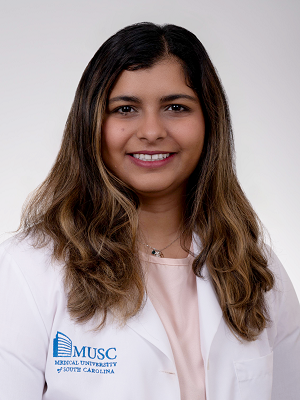
Dr. Natalie Trehan
DMD — Oral Medicine, Medical University of South Carolina
Assistant Professor at the Medical University of South Carolina, where she teaches pathology and focuses on the intersection of oral and systemic health. Dr. Natalie Trehan completed her oral medicine residency at the University of Pennsylvania and has received national recognition for her work in oral medicine and radiology. Her clinical and research interests center on head and neck disease, systemic conditions with oral manifestations, and chronic pain. She is also an active advocate with Take a Pain Check, a patient-led nonprofit supporting youth living with rheumatic diseases.
MUSC College of Dental Medicine
Dr. Melissa Seibert
DMD, MS, FAGD, ABGD
Creator and host of the Dental Digest Podcast — the #1 clinical dental podcast worldwide and a top 1% global podcast. Dr. Seibert is a former active-duty U.S. Air Force dentist, internationally sought-after speaker, Key Opinion Leader, and published author in top dental journals. She is passionate about equipping general dentists with high-level, evidence-based clinical skills.
Publications & SpeakingMaster This Workflow in Your Practice
The Dental Digest Podcast brings you the theory — but Elevated GP gives you the over-the-shoulder execution. Step-by-step video masterclasses, clinical mentorship, and CE credit to implement these techniques seamlessly. Join our global community of dentists.
Explore the Elevated GP MembershipStudies & Resources
- Take a Pain Check — Patient-led nonprofit for youth living with rheumatic diseases (Dr. Natalie Trehan's advocacy work)
- 2016 ACR-EULAR Classification Criteria for Primary Sjögren's Syndrome — Annals of the Rheumatic Diseases
- Diagnostic Criteria for Temporomandibular Disorders (DC/TMD) — Journal of Oral & Facial Pain and Headache
- Voulgarelis M., et al. — Lymphoma Development in Primary Sjögren's Syndrome: Risk Stratification
- Hakim A.J., Sahota A. — Joint Hypermobility and Skin Elasticity in Ehlers-Danlos Syndrome (Articaine considerations referenced)
- van der Kolk B. — The Body Keeps the Score (referenced on trauma and chronic disease)
- Medical University of South Carolina — College of Dental Medicine
- Free Guide — The Injection Molding Technique for Predictable Anterior Composites (Dr. Seibert)
Full Episode Transcript
Dr. Melissa Seibert: Welcome to Dental Digest. This is a podcast with a mission of enabling you to stay on the cutting edge of evidence-based dentistry. I'm your host, Dr. Melissa Seibert. Today, I'm joined by Dr. Natalie Trehan. Dr. Trehan is an assistant professor at the Medical University of South Carolina, where she teaches pathology and focuses on the intersection of oral and systemic health. She completed her oral medicine residency at the University of Pennsylvania and has received national recognition for her work in oral medicine and radiology. Her clinical and research interests center on head and neck disease, systemic conditions with oral manifestations, and chronic pain.
In this episode, we're going to talk about systemic disease and its oral implications, including conditions like Sjögren's disease, autoimmune disorders, and TMJ involvement. Dr. Trehan walks through how she evaluates these patients clinically and radiographically, and how thinking beyond the oral cavity changes both diagnosis and treatment planning.
Dr. Seibert: So what are some of the most common systemic diseases that might first present with oral symptoms?
Dr. Trehan: Sure. So I think one thing to consider is my answer might be a little bit different because I'm at an academic institution. People come to academic institutions — I have patients from California, Florida, Georgia. They come down to Charleston specifically for systemic health because they don't know anywhere else to go. But in a private practice setting, the ones that tend to come up and we see frequently — more and more, again, post-COVID — are things like our rheumatic diseases and our dermatologic diseases. And then also, in general with patients, our kidney diseases, diabetes, and hypertension. That's like 99.9% of my patients in Charleston will have the triad of high cholesterol, type 2 diabetes mellitus (which is a lifestyle or adult-onset diabetes), and hypertension. And that triad — you need to know your medications for that inside out.
With the systemic diseases that have oral manifestations: primarily rheumatic diseases. You see more and more patients with something like rheumatoid arthritis or juvenile arthritis, and they have that TMD involvement. Patients with scleroderma or Sjögren's disease, where we have that mix of rheumatologic and dermatologic components. That's also been a little bit more of my research interest recently.
Sjögren's disease specifically is a rheumatic and derm disease, but also a dental disease, right? Because you have that involvement. Traditionally it was called Sjögren's syndrome with the dry eyes, dry mouth, but now it's been reclassified as Sjögren's disease because it's a disease in its own right. So you'll have patients with the xerostomia, which is the subjective finding of dryness, and then hyposalivation is the objective finding — how much you can objectively quantify that they have dryness in their mouth. And then you'll see things like the candida that can come up with these patients. They can have oral thrush, and increased incidence of cavities, because they don't have that protective layer from their saliva.
Other than the cavities and the thrush in general with the dry mouth, they might have parotitis as well. So I have a good portion of patients with parotitis, which is chronic inflammation and pain of their parotid glands. What I actually do to treat these patients is I do Botox for them. I don't inject directly in the parotid glands because that's where their dryness is, but we do therapeutic masseteric Botox — inject Botox into the masseters to relax the muscles nearby. And that actually has been helping their parotitis and calming that down too.
Dr. Seibert: How is it that causing relaxation of the adjacent muscles could help to manage parotitis?
Dr. Trehan: It's all anecdotal right now. I couldn't tell you the exact mechanism of it, and there might be some spread from the neurotoxin relaxing the overall area, but it's not significant enough for it to cause additional dryness into the parotid because we're not additionally injecting into it.
Dr. Seibert: You talked about rheumatoid-type conditions and how that can have involvement with the temporomandibular joint. So often this goes under-recognized and under-diagnosed. How can we be better at recognizing it? And how does it affect the TM joint?
Dr. Trehan: Yeah. So there are so many different ways that the temporomandibular joint can be affected — with arthritis in general as an umbrella, and then our rheumatic diseases. The one we tend to commonly see is when they have the beaking of the temporomandibular joint. So it kind of looks like a bird's beak, where you have the flattening and then it's like quite a steep hill as well. That tends to be a little bit more of osteoarthritis. You'll have what you call osteophytes — little pieces of the bone breaking away too. And then you'll also have what we call joint mice. That's what you could see most likely with osteoarthritis. And it doesn't always mean that they're going to be older patients. You can have patients in their 20s and 30s, even though it's considered an old people's disease. You can have younger patients with osteoarthritis of their TMJ as well.
When I have patients that I'm suspecting have an inflammatory arthritis component — like rheumatoid arthritis or juvenile arthritis — I take the patient as a whole. One: are they complaining of other systemic involvement? So I actually will test, and I've rotated with rheumatology specifically and done that, where I'll feel their other synovial joints and see if there is other involvement. I'll ask some questions in their HPI as well. Are there anyone else in your family who lives with an autoimmune or rheumatic disease? Have you ever been worked up for an inflammatory arthritis or an autoimmune disease? I'll also ask if they have any other joint stiffness or pain or swelling. If they've suddenly noticed that maybe their shoes don't fit or their feet have swollen up over the years and they've increased in shoe size — that can be one of the signs as well. Things like morning stiffness and bilateral joint pain. Those are things I commonly look for. Then I can do a lab workup because I have the flexibility to run the autoimmune labs.
If that's what I'm suspecting for their TMJ involvement — I see that there is some wear on their panoramic x-ray (and that's usually my first line, a panoramic x-ray), some flattening or beaking or the condylar head is just reduced overall — then I'll order an MRI TMJ. So the MRI for the temporomandibular joints, you can do it without IV contrast. That is the standard. And you only do it with IV contrast when you're suspecting juvenile idiopathic arthritis. I will put as a caveat: per the TMD diagnostic criteria, you're supposed to be doing a CT TMJ for joint degeneration, and for more synovial tissue involvement, you do an MRI. However, with ease of access and insurance coverage, as a baseline I tend to do more MRI TMJs because that is what gets approved as a next step and more patients have access to that, rather than a cone beam CT or a CT for their TMJ joints.
Then I get the MRI back, and I'll be able to see — per the reading — if there is, when they're in their open or their closed position, any joint dislocation, any locking, or any degeneration in general. The way that these patients present, in my clinical exam, I would expect to see things like trismus, limited opening under 20 millimeters, maybe a locking history as well. And then I would also expect to see them complaining of things like difficulty chewing, pain on chewing, pain when I'm palpating. Another thing that I tend to notice when I ask them for opening and closing — I use a little ruler. I don't know if you have a Therabite little ruler. It's that one I tend to use. And if they open super wide — so not trismus, but hyperextension — then I'm thinking more of a hypermobility disorder. So something like Ehlers-Danlos might come to mind if they're hypermobile in other joints. You can get the other spectrum of rheumatic diseases where they're now overtly hypermobile, where they have an opening of like 60 and 70 millimeters. And that happens to my patients, and you warn them not to open that wide because we don't want frequent dislocations. We would work them up further for EDS if they have a history of that too.
Dr. Seibert: Ehlers-Danlos, connective tissue disorder patients — the other day I had one and she was a delight. My heart very much went out to her and other Ehlers-Danlos patients because it seems as though they come with a whole host of other medical conditions. And it can be really overwhelming when you see it first. It almost might seem random — why do they have all of these other conditions? Why have they had all of these other surgeries? Can you explain what is it about connective tissue disorders that lead to a whole host of other conditions?
Dr. Trehan: Yeah. So in general, what I tend to tell my patients with autoimmune diseases is unfortunately, when you have one autoimmune disease, they tend to have a frequency of developing other autoimmune diseases. It's just the way that our immune system is and the way inflammation is in general — attacking our body. So we have our acute inflammation, that's what we all have, and then the body recognizes it and we go back to normal. In these patients, when inflammation continues and they have this chronic inflammation where the body's not recognizing it — it's this continuous chronic inflammation that's no longer good in the body in general. Not only do their medications suppress their immune system and make them more likely to develop other viral or bacterial infections, but their inflammatory response is not the same as other individuals or normal individuals. So they just have this tendency to develop other autoimmune conditions. I've seen them also develop other things like cancers.
For Sjögren's disease, for example, there's a 2 to 7% chance — it depends on the studies that you read — but a 2 to 7% chance of developing lymphomas. Lymphomas in particular, because Sjögren's disease is a lymphocytic infiltration of your glands. That means you're going to have things like interstitial lung disease or renal tubular disease as well, because the lymphocytes will attack the kidney. You can have the parotitis because the lymphocytes are attacking the parotid gland. It can affect your lacrimal glands, your exocrine glands. So they tend to have that 2 to 7% increase of B-cell lymphomas as well, because it can attack that part.
I kind of joke with them — they're like Pokémon. You've got to catch them all. When I have these patients with multiple diseases, most of them appreciate that. They laugh because at this point they've lived with it. They know how to deal with it too. I work a lot with patient-led nonprofits — one of them is Take a Pain Check, which is a nonprofit for youth living with rheumatic diseases. We focus on patient-centered care. It's by patients, for patients. It's also a podcast and an online resource and a foundation. So I do a lot of work with patients generally, and they enjoy making sometimes jokes about their disease because that's the way that they control it as well.
Other than having multiple autoimmune diseases, there are so many features that are so nonspecific that you don't know what's going on and what's related to each disease. Things like fatigue, joint pain. I was teaching my students about the liver, and we were talking about bilirubin. I was like, okay, you're going to see bilirubin and jaundice in literally every single one of these diseases, because that is just a nonspecific finding with liver diseases in general. There is just this elevated bilirubin. We have that with so many diseases. If you said fatigue and pain — that is so nonspecific. Are you thinking endocrine, like thyroid issues? Are you thinking diabetes? Are you thinking rheumatic? Are you thinking dermatologic? So they have so many other things going on as well.
And same with Ehlers-Danlos — we've seen that rise in patients getting diagnosed with Ehlers-Danlos. A lot of focus has been now on that with social media post-COVID; people have been more aware of these diseases. And then there's also that increase of things like POTS. We see a lot more of that on social media.
Dr. Seibert: Can you actually speak to POTS? I had a family friend, she had POTS, and that sadly also seemed debilitating. I know we're dentists, this is ultimately for dentistry, but we're going to see these patients in our office. The more you understand, the more you can treat these patients with compassion. Because connective tissue disorder patients, POTS patients, fibromyalgia patients — if you don't know any better, you might get a little frustrated. But once you really understand the complexity and the etiology and what the patient is suffering through, you can approach it with a lot more compassion. I think that prevents a lot of burnout.
For a lot of dentists, we quote-unquote "deal with the public" — which, if you approach it the wrong way, you're going to hate your life. But there's a right way to approach it. Part of it is understanding. I'm getting off script a little bit, but I also really think: never complain about your patients. Don't make fun of them to the staff. Don't make fun of them to your spouse. It's going to burn you out. You don't know what they're going through. And if you start hating your patients, it's going to be a miserable road for you.
Dr. Trehan: Yes, it is. That is very true, honestly. What you said about understanding is so important. I don't think I would be the same provider I am today without the advocacy work I do and without the personal experience. My sister actually was diagnosed at the age of 13 with juvenile idiopathic arthritis. She kind of got us all into it. She launched this podcast and nonprofit and did everything. It's been three years, but we have over 50 volunteers worldwide, great reach. Because of her personal journey and her personal story, and it directly impacting me and seeing how much she had to advocate for herself — advocating not only at school and with her teachers, but then advocating in every office.
In things like dentistry, where they don't realize — okay, orthodontics: are orthodontics going to work for every single one of your patients? If they have EDS and they are getting braces, their teeth are going to shift faster. So if you're getting an extraction and planning, you might want to have that ortho appointment ASAP, because their teeth are probably already going to shift. For EDS patients, Articaine, right? So Articaine is one of the only safe — or tolerable — anesthetics for patients with EDS, because they metabolize other anesthetics a lot quicker. So a lot of this knowledge — it was me looking at patients and researching it. Or the patient's on a biologic — maybe we don't want to do something invasive right now. Maybe you want to wait and look at the periods when they're not on it, look at their blood values. I have become a more empathetic provider because of that.
It's so bad when you think about it, but humans in general are selfish. We are inherently selfish individuals. Until something impacts us directly, we don't fully understand the impact of it. Overall, me being a better provider is because of her experience and because of all the patients I've worked with. But until we understand that disease and understand where our patients are coming from, we don't get it.
Dr. Seibert: Sometimes I wonder, now we're getting a little philosophical, but sometimes I wonder if it's truly a selfishness, or rather having a hot amygdala perceiving maybe a threat that is not necessarily there, or maybe there really is a threat. And so that perhaps leads us to live in our own little world. We think that we're the only one on this planet that's suffering. But let's go back a little bit and just again, talk about fibromyalgia patients. Sometimes I don't think that they always get a fair shake. I'll be the first one to admit — I don't think I completely understand the condition. I don't know enough about it. So I will be really completely transparent when I see fibromyalgia patients. Sometimes I just think, oh boy, this person's going to be a baby. But it's because we don't know, and I don't know enough about the condition. So can you speak to that a bit?
Dr. Trehan: Yeah, of course. So I will say a couple of things about fibromyalgia. With fibromyalgia, I think there is that misconception or perception that people who get labeled with that fibromyalgia diagnosis — you see it and you're like, "oh my god, that patient has..." That's the fibro patient. There are providers who put it when they are like, okay, this is a chronic pain patient quote-unquote, who we can't really figure out, or they just are not listening, or they're doing this — these are the difficult patients, and that's why we label them fibromyalgia. I'm going to admit that probably a lot of medical providers and other providers do that.
I don't know if you've watched, there was an episode or a video where they talk about women patients and they talked about how they used to label them — when they were fibromyalgia or endometriosis. Those were the difficult patients. That's the label we've given fibromyalgia — these are the difficult patients that we just are labeling in this group. Of course, we all have that little inherent bias that can still sometimes cloud our judgment.
Moving past that — I've been learning more about fibromyalgia. I'm going to share an anecdote about a person I work with — not my specific patient, but one of the advocates I work with. They were diagnosed initially with lupus when they were a child. Then that diagnosis changed and became JIA. Then that diagnosis changed again and became EDS. And now that diagnosis is fibromyalgia. But that patient had all the symptoms at that time of lupus, did not meet the markers of it, but they were on all these medications for lupus, then for JIA, then for EDS, and now for fibromyalgia. The doctors at that time really could not figure out what was going on, but it was mimicking all the symptoms at that time of those diseases.
That patient had to go through all the biologics, the methotrexates, the prednisones, the NSAIDs. Their pain was real because their pain was to the level of something like lupus or to JIA or EDS — but it was just diagnosed or labeled as different things. That's not a unique story. There's so many patients I've talked to in my advocacy group that are the same — initially diagnosed with something, then more things came out, then they were diagnosed with something else, and then something else. Just given a label for it as fibromyalgia or as something else. But that pain was not discounted throughout, and they had treatments throughout their time for the very real pain.
We've kind of labeled fibromyalgia as — again, we just have this bias against it, unfortunately, where we've kind of said: okay, this is all the other diseases, and this is the bucket of fibromyalgia. That's what's left over. It's like the undifferentiated connective tissue disease or mixed connective tissue diseases. A lot of rheumatologists and physicians don't want to treat fibro. When I came to MUSC, I was actually surprised because the rheumatologists treat fibromyalgia. Every other place I've worked at or studied at, the family doctors treat fibromyalgia because they don't consider it rheumatic. This was the first place where I was like, "What? You treat fibromyalgia?" And they were like, yeah, we take it. Most places it just goes to the internal med doctors or family doctors. They're like, no, we don't treat that here. That's not considered rheumatic, or it's not considered part of our pain spectrum.
Dr. Seibert: Do we have any idea what the etiology is of fibromyalgia yet?
Dr. Trehan: No. I know it's just more widespread pain in general, but not exactly what is causing it. Again, like we talked about with things like POTS, EDS, and now fibro — there's been more of a resurgence. That can be one — awareness — to more diagnosing as well. Social media plays a role in that.
But with these diseases, one thing in general with rheumatic diseases — what I've found in my experience and what I've seen and heard from other patients too — is they all had sort of a triggering event before this started. From my sister's personal experience — juvenile idiopathic arthritis, it's idiopathic. We had no idea what caused it. It just randomly came up. In our immediate family, none of us have rheumatic diseases, but we have other autoimmune conditions — I have Hashimoto's thyroiditis and endometriosis. My mom has endometriosis as well. There are other conditions, but not this autoimmune condition. And then she was just extremely stressed out in the seventh grade and had six strep infections in two years. That was, for her, what we all anecdotally believe is the triggering event that caused it. Or maybe it was there before, lying in wait, and it needed this release for it to be active. I've seen that with other patients. I'll be like, was anything the trigger? Did anything happen? And sometimes it's COVID. A lot of my lichen planus patients — it's COVID quite frequently that triggered their lichen planus.
Dr. Seibert: This is wild. Now we're getting really philosophical here, but have you ever read the book The Body Keeps the Score?
Dr. Trahan: No, I haven't.
Dr. Seibert: That's a book that changed my life. It's very well done, well substantiated, evidence-based. This isn't just speculation, but it's really just about how the body stores trauma. Now I'm really speculating — we're getting really philosophical for a dental podcast — but some of my chronic pain patients, I really get to know them well. It's not oversharing, it's just through relationship building over time. I'm going to throw this out here. This is mostly Seibert speculation. An overwhelming majority of my patients with autoimmune conditions and perhaps chronic pain secondary to autoimmune have had a difficult history of trauma. I have yet to find a patient with one of these conditions that sadly did not have something of that in their history. Again, this is all just speculation, but all that to say — I think we can't ignore the relationship between mental health and systemic health and the implications of trauma on systemic health.
Dr. Trehan: Yeah. And trauma also — I know what you're saying, like physical trauma too, but also trauma to the body from a viral or bacterial or some other cause. Like again, with COVID being there or with strep infections or things like that — it is traumatic to the body, especially when I have very young pediatric patients who get something like JIA at two years old. They're kind of regressing backwards. In most of the cases, as you're saying, there has been some kind of triggering event — whether that was them getting sick suddenly and then regressing backwards, where it's kind of like the immune system was lying in wait and this triggering event caused this cascade to come out later.
Dr. Seibert: Wow. Interesting to speculate. This is so interesting. I love this conversation. I'm so glad that you reached out to me. I get several emails a day of "Johnny so-and-so has this expertise, they want to come on," but you told me about your expertise and I was like, "Ooh, this is going to be interesting." And this has been a very interesting conversation. Not where I thought it was going to go — but hey, you never know.