
The Anti-28-Crown Rule: A Smarter Way to Treat Worn Teeth
Why drilling down 28 teeth for full ceramic makeovers is the wrong default for young patients—and the simple, tooth-saving workflow that should replace it.
Why You Should Stop Drilling Down Every Wear Case
When a patient walks in with short, worn-down teeth, the default strategy for many dentists is a full-mouth ceramic rehabilitation. It looks amazing on Instagram, and it is highly profitable. But drilling down 28 perfectly healthy teeth into tiny pegs is often a bad clinical choice—especially for younger patients.
More than 30% of teenagers and young adults now show significant tooth wear. If you place full porcelain crowns on a 25-year-old, those restorations will not last their entire life. That patient will face two or three painful, incredibly expensive remakes down the road. Every time you replace a crown, you cut away more tooth structure and risk killing the nerve.
Instead of jumping straight to the drill, we need to utilize standard dental bonding (composite) to add height back to the teeth without cutting away healthy enamel. Composite functions like a "permanent night guard" directly on the teeth. If the patient grinds, the composite safely absorbs the forces. If a piece chips or wears down after a few years, you don't remake the whole mouth—you quickly patch it in minutes. Chemistry beats aggressive drilling every single time.
How to Spot the Difference Between Acid and Grinding Friction
In this episode of the Dental Digest Podcast, Dr. Didier Dietschi—senior lecturer at the University of Geneva and adjunct professor at Case Western Reserve—joins host Dr. Melissa Seibert to share a simple, interceptive workflow for managing tooth wear.
Reading the Patterns: Attrition vs. Erosion
You cannot fix a worn bite until you figure out what is destroying it. Dr. Dietschi breaks this down by analyzing simple patterns across the arches:
* The Deep-Bite Bruxer: These patients slide side-to-side with heavy force at night. Their unique jaw shape protects their back teeth, so you will see massive flattening exclusively on the front teeth.
* The Pure Clencher: These patients squeeze straight down with massive muscle force. They rarely grind forward, meaning they create deep wear facets and fractures concentrated on their back molars.
* The Acid Erosion Pattern: This is chemical damage from soda, energy drinks, or gastric reflux. It scoops out hollow, glassy cupping patterns on the chewing surfaces of the teeth, leaving the white enamel borders standing like thin walls.
The Hidden Lie of Modern Jaw-Tracking Gadgets
There is a massive trend right now around expensive digital jaw-tracking devices like Modjaw. Dentists use them to map jaw paths while the patient is awake in the chair. But Dr. Dietschi warns that this data misses the real issue. How a patient moves their jaw while awake has absolutely nothing to do with the violent, chaotic movements their muscles make during deep sleep. Skip the expensive gadgets—just look closely at the wear patterns on the teeth to see the real story.
The "Courtesy Mirror" Trick for Better Night Guard Compliance
Getting male patients to consistently wear a night guard is incredibly frustrating. They buy it, slide it into their nightstand drawer, and let their teeth continue to flatten. To fix this, Dr. Dietschi uses a simple communication trick during delivery.
Hand the patient a mirror, point to their face, and say: *“The person looking back at you is the only one who decides how long this dental work lasts. If you wear the night guard, these tooth-saving fillings will easily last 10 to 15 years. If you leave it in the drawer, we will see each other again very soon for an expensive remake.”* Framing compliance around personal accountability and saving money stops the objections immediately.
Clinical Takeaways
- Avoid the Porcelain Default: Stop using 28-crown makeovers as your automatic solution for young wear patients under the age of 30.
- Analyze the Wear Pattern: Differentiate friction wear from chemical acid damage by examining the specific distribution of lesions across the arches.
- Choose Composite First: Utilize additive dental bonding as a reversible, tooth-saving buffer layer that eliminates the risk of losing pulp vitality.
- Simplify Your Classifications: Group wear into three simple chairside tiers—moderate, intermediate, or severe—instead of using overcomplicated academic indices.
- Use the Mirror Strategy: Hand patients a courtesy mirror to visually lock in personal accountability for their night guard compliance.
Chapters & Timestamps
| Timestamp | Topic Covered in Episode |
|---|---|
| [00:00] | Introduction: The Case Against the Aggressive 28-Ceramic Default Rule |
| [05:30] | The Monotherapy Trap: Why Modern Dentistry Tends to Over-Treat Worn Teeth |
| [12:15] | The Lifespan Myth: Tracking Long-Term Failures in Early Full-Mouth Reconstructions |
| [19:40] | The Resilient Alternative: Using Dental Composite as a Tooth-Saving Buffer Layer |
| [27:00] | Diagnosing Wear Patterns: Telling the Difference Between Acid Erosion and Grinding Friction |
| [35:20] | The Parafunctional Envelope: Why Awake Jaw Tracking Devices Miss Sleep Grinding Movements |
| [42:50] | Improving Night Guard Compliance: The Courtesy Mirror Script and the Financial Realities |
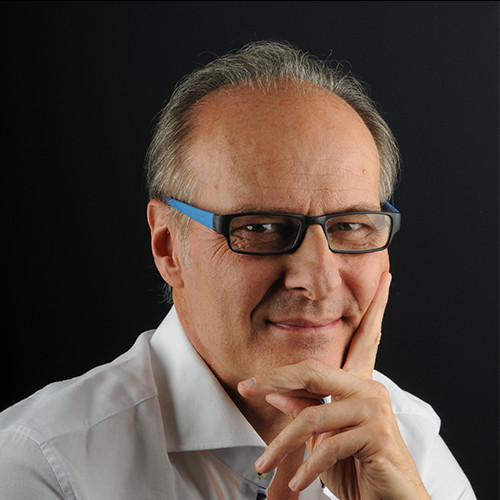
Dr. Didier Dietschi
DDS, PhD — University of Geneva
Senior Lecturer at the University of Geneva, where he holds a private docent degree, and Adjunct Professor at Case Western Reserve University. Author of over 115 scientific publications and textbook chapters, internationally recognized for his contributions to adhesive and aesthetic dentistry. Co-author of Adhesive Metal-Free Restorations and author of the paradigm-shifting textbook Tooth Wear: Interceptive Treatment Approach with Minimally Invasive Protocols.
University of Geneva Faculty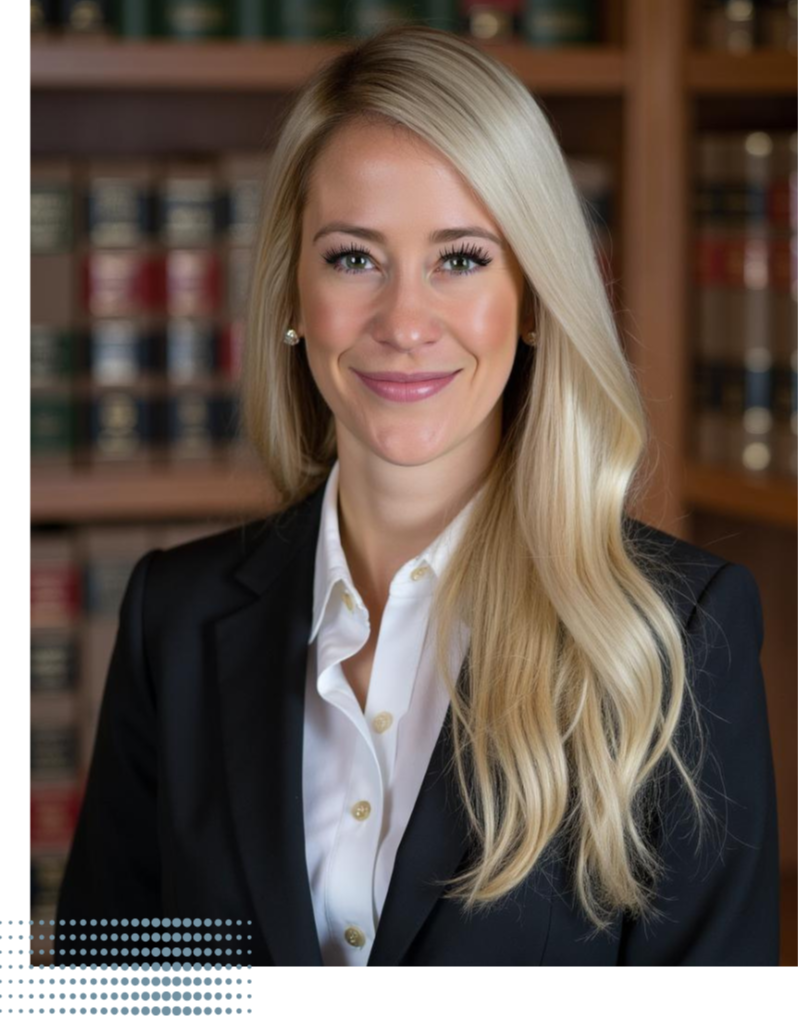
Dr. Melissa Seibert
DMD, MS, FAGD, ABGD
Creator and host of the Dental Digest Podcast — the #1 clinical dental dental podcast worldwide and a top 1% global podcast. Dr. Seibert is a former active-duty U.S. Air Force dentist, internationally sought-after speaker, Key Opinion Leader, and published author in top dental journals. She is passionate about equipping general dentists with high-level, evidence-based clinical skills.
Publications & SpeakingMaster This Workflow in Your Practice
The Dental Digest Podcast brings you the theory — but Elevated GP gives you the over-the-shoulder execution. Step-by-step video masterclasses on adhesive dentistry, occlusion, and treatment planning, clinical mentorship, and CE credit to implement these techniques seamlessly. Join our global community of dentists.
Explore the Elevated GP MembershipStudies & Resources
- Dietschi D. — Tooth Wear: Interceptive Treatment Approach with Minimally Invasive Protocols. Quintessence Publishing.
- Dietschi D., Spreafico R. — Adhesive Metal-Free Restorations: Current Concepts for the Esthetic Treatment of Posterior Teeth. Quintessence Publishing.
- Vailati F., Belser UC. — Full-Mouth Adhesive Rehabilitation of a Severely Eroded Dentition: The Three-Step Technique. European Journal of Esthetic Dentistry.
- Schlueter N., Luka B. — Erosive Tooth Wear: A Review on Global Prevalence and on its Prevalence in Risk Groups. British Dental Journal.
- Wetselaar P., Lobbezoo F. — The Tooth Wear Evaluation System (TWES): A Modular Clinical Guideline.
- Free Guide — The Injection Molding Technique for Predictable Anterior Composites (Dr. Seibert)
Full Episode Transcript
Dr. Melissa Seibert: Welcome to Dental Digest. This is a podcast with a mission of enabling you to stay on the cutting edge of evidence-based dentistry. I'm your host, Dr. Melissa Seibert. Today, we're joined by Dr. Didier Dietschi, one of the most respected researchers and clinicians in adhesive and aesthetic dentistry. Dr. Dietschi holds both a dental degree and a PhD, along with a private docent degree from the University of Geneva, where he serves as a senior lecturer. He is also an adjunct professor at Case Western Reserve University and has authored over 115 scientific publications and textbook chapters. He's internationally recognized for his contributions to adhesive dentistry and is the co-author of Adhesive Metal-Free Restorations. He's also the author of one of my current favorite textbooks, Tooth Wear: Interceptive Treatment Approach with Minimally Invasive Protocols, which presents a very contemporary and frankly paradigm-shifting approach to managing wear patients without defaulting to full-mouth ceramic reconstructions.
This is part one of a two-part series. In this first part, we're going to explore a fundamental shift in how we should be thinking about tooth wear. Dr. Dietschi challenges the increasingly common 28-ceramic-rehab mindset and instead advocates for an interceptive, risk-based, and minimally invasive approach.
Part of why your book resonated with me so much is that here in North America, a lot of restorative dentists want to do these full-mouth rehabilitations. It's almost this big goal. It's profitable. It makes dentists feel like, wow, they've really made it if they're doing these full-mouth rehabilitations — but they're missing the spirit behind it. They're missing why they're doing it. In your book, I really liked the conservative framework and the acknowledgment that we need the diagnosis and the underlying etiology.
Dr. Dietschi: It is, in fact — and I believe surprisingly — in dentistry we are going against the trend in medicine. Medicine is being a lot more fine-tuned, individualized, based on risk factors and specific pathology, and there is no monotherapy applied. We see it in every domain that is really progressing. If we think about cancer treatment, there are a lot of domains where we are really going toward individualized treatment. Surprisingly, dentistry is going exactly the other way around — toward monotherapy. Anyone showing some wear is going through the 28-ceramic restoration approach. That's why in some of my courses I use as a title the "anti-28-ceramic-restoration" approach, even though it might be needed.
The idea is that we try to delay it, and especially when we look at younger patients, the prevalence of tooth wear — whether erosive or attrition or mechanical — in teenagers and young adults is above 30%. We're speaking about a significant amount of wear. I don't think we can believe that going with 28 ceramic restorations on a patient who is less than 30 years old can really be considered a correct approach. We need to find a way to delay more invasive treatment, because unfortunately, if we go with ceramics, it's nearly impossible to go no-prep. Upper and lower arches can be restored no-prep only in a class III occlusion or edge-to-edge occlusion.
I think it's really supported by logic, and we need to be more careful in engaging complex treatments. We see sometimes amazing treatments — the outcome is really beautiful. Some of them are done in an academic environment, maybe in the context of a course as a demonstration. But think that those patients, even if it's done in perfect ideal conditions, those restorations will not last for a lifetime. Patients will need to go through a second or even a third full-mouth rehabilitation. When I see these rehabilitations done on patients who are just 20 years, 20-plus years, I believe this is not right.
Dr. Seibert: You mentioned something so important that really resonated with me — that oauth times with these full-mouth rehabilitations, over the course of a patient's lifetime they might require several of them. So often that's overlooked. I'm not sure so much in Europe, but I do know in North America, these full-mouth rehabilitations require extensive preparation of tooth structure. Perhaps that might not be so problematic if patients didn't require multiple of these over the course of their lifetime. Can you speak to that a little bit more?
Dr. Dietschi: Yeah, there are many different things that we need to look at. I think the main reason why so many dentists around the world — the United States, but not only the United States — believe that ceramics, overlays, and tabletop crowns have a much better lifespan is that this belief is based on the observation of those restorations in non-bruxers, in patients not showing really severe tooth wear, patients with good hygiene, patients with thick or medium biotype.
Now, I'm really observing — because I've been in dentistry for decades now — and I could observe restorations and rehabilitations made with Michel Magne, with Adrian Schönenberger, in the iconic ceramics era. And I think I've really tried to apply all the correct principles. Thirty years ago, I was very much into occlusion, gnathology, so I was also following all the rules which were considered the gold standards back then. But now I can really differentiate. You have patients with no heavy parafunctions, medium or thick biotype, excellent hygiene. Look at the cases — well, I have so many cases 20, 30 years later, they still look quite nice. But I also had many cases where risk factors were not under control: poor hygiene, no compliance with the night guard. You have discolorations everywhere, tissue recession, you see the margins, you have non-vital teeth, you see the black areas, fractures of ceramics.
It's absolutely wrong to think that full ceramic restoration, even with modern ceramics, is going to last forever. This is a myth, and this is just denying the reality. And I think this is something that we need to understand.
Yes, composite is not a stronger material, but it is more resilient — it is adaptive. Because if you leave some unbalanced contacts, that will wear off. And for many patients, if they are at least a little compliant with the night guard, you can go for 10 years with a no-prep solution that you can reuse some years later, and you can go for maybe 20 years, maybe even more. With minimal invasiveness, you will never get any biological complication, no severe complication with composite restorations. Whereas with ceramics, you still have risk of losing vitality, and failures are always dramatic. If you look at the statistics, the literature: with indirect restorations, you only have dramatic or severe failures which require replacement of the tooth, sometimes anecdotal complications, sometimes even problems leading to extraction. With composite, you're not exposed to any of those complications.
So I think we need to make a switch in our minds and look at prosthetic rehabilitations in a different way — when it is needed. Because I'm not saying that we don't need crowns and overlays and tabletops; I'm saying we need them at a later stage in the patient's life. It's just a matter of when do we start with this kind of treatment, and which are the alternatives from no treatment to a full-mouth rehabilitation. That's this whole philosophy of interception of tooth wear.
Dr. Seibert: I really love that you've differentiated between the full-mouth rehabilitation versus actually getting to the bottom of the source of the problem. And that's not discussed enough. I think so often we as dentists think that if we just do the full-mouth rehabilitation, the wear and the parafunctional habits are going to go away. Can you talk about what is your workflow and protocol for getting to the bottom of the source of wear? And how do you manage and treat the wear apart from the full-mouth rehabilitation?
Dr. Dietschi: That's the key point. Because in fact, there are a lot of misconceptions — and I include myself in that. It's a lack of information, a lack of perspective about tooth wear. I would say we have the chance that 60% of patients — there are nice statistics about this — will consult for tooth wear problems. They consult because of the aesthetic impact of wear. So that's actually at least the incentive we can use to engage the patient in doing something. But in fact, a second factor that is very important is to realize that what we might have in mind — which is a very small percentage of wear cases, erosive tooth wear that has affected basically the whole mouth in a relatively similar way — that is just a few percent of tooth wear cases.
So the first thing is really to look at the mouth of the patient, look for the type of lesions which might indicate the risk factors, because it's a combination of evaluating the damage that was made to the dentition, area per area. Because very often we have more wear on the lower arch, especially for attrition — but you have exceptions. Some patients show more wear on the upper. There are probably some occlusal anatomical factors that can explain that. The amount of wear, especially for attrition cases, and the distribution of wear are very much connected to the occlusion and anatomy. If you have a deep-bite patient who is a bruxer, the deep bite will disclude the posterior dentition — so you have very little attrition on the back teeth, a lot more on the front teeth. If you have a clencher, it will damage mostly the back teeth, potentially all the teeth.
When we understand the mechanics and the function-correlation with anatomy and type of occlusion, we start to understand the parafunctional envelope. Trying to understand if we deal with clenching or bruxism — the differentiation is really about the extent of the parafunctional envelope. A narrow parafunctional envelope can be seen as clenching. An extended parafunctional envelope is more bruxism. We start to understand the type of movements which affect the health or the biomechanical status of teeth.
There is a lot of emphasis today on functional recording — the Modjaw, the dynamic measuring devices. But what people don't realize is that the awake functional envelope has nothing to do with the sleep parafunctional envelope. So you think you record the kind of movements the patient is doing, but in fact this information cannot be recorded with any device. You need to look at the teeth, see where the damage developed, and then you understand. You combine this to the occlusion, and then you understand what happens. Just look at the teeth. You will understand whether you mainly have erosion, you mainly have attrition, or a combination of both risk factors — which is to me today the most likely situation.
The contribution of both risk factors changes between patients and might change also over life as the severity of the wear evolves. I have some cases where, for instance, mothers, during the time they were in charge of managing their children — with all the stress that was generating — they had quite some wear. At the moment the children grew up and became more independent, especially if they were living in a happy and serene family, all of a sudden the attrition went away. And you see it with the way the night guard evolves — you get less and less damage. So it's a very dynamic phenomenon. We need to remain open, to follow up, and we might need to change strategy.
To come back to a more structured approach: look in the mouth, analyze the severity of wear per area of the mouth, then define the risk factors. When you understand the type of lesions which erosive and mechanical wear generate, it's getting relatively easy to understand the kind of risk factors we deal with. Explain this to the patient. Communication is a key factor. Try to involve the patient into the team — dental technician, patient, and us dentists. If we are the only ones with the dental technician working for the patient, and the patient is disconnected from the team, we're going to fail one way or another.
Then build up a treatment strategy that integrates the age of the patient, the socio-economic environment. Can the patient afford some ceramic work? I love the hybrid approach — combining ceramics maybe to stabilize occlusion at the level of molars where I have less wear and more space. To fine-tune, to tailor the treatment according to socio-economic environment, the patient's understanding of the risk factors, compliance, and restorative needs — because there are some objective treatment needs depending on the level of tissue destruction.
And again, very important: the age. We're not going to approach the same amount of tissue wear at the age of 80 or 30. Sometimes in elderly patients, even though aesthetics is not great, if we don't have other restorative needs, I would tell the patient, "Look, wear a night guard, stabilize the problem. If you are not having any pain, any functional discomfort, if you are not desperate regarding aesthetics, probably the best thing we can do is just a night guard and taking some precautions."
From there, trying to maintain prevention in our treatment approach, and then go hopefully early enough so that we can integrate as the first option interceptive protocols. Then we can revisit the decision. If we fail with interception, we move to restorative prosthetic. And even with restorative prosthetic, we still need to work on the preventive measures — to diminish the risk for further erosion or attrition. So with time, I started to understand the logic we should follow, and not just jump on the bur and the intraoral scanner and go for a full-mouth rehab. Even if we do it with a microscope or with the best intentions, trying to go minimally invasive. In a way, I like to say: wait and see. If we can control risk factors, we might be able to stabilize the case in a very simple, conservative way and help the patient to manage his dental health over a long period of time. Because today, high-level indirect restorations are very expensive — we also restrict the access to this kind of treatment to a very small part of our patients.
Dr. Seibert: A lot to unpack there. So often when patients do have wear, it's not only because of the things that they're doing at night. I want to ask a few questions just about hard night guards. First of all, how do you talk to your patients about hard night guards? How do you get buy-in? Personally, I'm finding that it's hard to get my patients to consistently wear them. They sometimes feel that they're uncomfortable. I oftentimes find that women are a bit more compliant than men.
Dr. Dietschi: You know, I have two frustrations in my professional life. The first one has nothing to do with the topic we're discussing — it's modern implants. Something that many people do not know: I started, in fact, my professional life doing perio. I made a perio specialty because I wanted to become a perio specialist. But I had to wait two years before starting my perio specialty, so I went into the restorative department. I fell completely in love with restorative dentistry, but I didn't want to abandon my first love. So I went through my perio specialty. I stayed for about seven years in the perio department at our university. And perio, as we all know, leads not exclusively but mainly to implant dentistry. So I still had probably 30–40% of my activity being perio-implants. And the first 15 years of my career as an implantologist led to zero problems. When I was asked by a patient "how long will those implants last?" I said, "Implants probably for your life. Restorations, maybe not." Peri-implantitis did not exist. I speak from the time we were using smooth titanium and the first generation. We are coming back to this generation with the novel later-generation implants with smooth 4–5 millimeters — that was the idea of Richard Lazzara at BioHorizons: maintaining just machined titanium in the first four millimeters below the bone level.
I've seen patients who got those implants 20 years ago. Next to them, I have a modern implant — Straumann, to mention also that the first rough surfaces were much better than what we have today. You see now 20-year-old implants, next to them later-generation implants, and after two, three years you already see bone remodeling. But bone remodeling will shortly become peri-implantitis as soon as bacteria reach this area. And this did not exist. Surface is maybe one element; maybe internal connection — we had stronger types of connections before, maybe reducing deformation of implants. It's such a frustration. I look now very carefully at the cases of the key clinicians. I don't put names. When they start to show follow-up, most of their implants are losing bone — and they are the top clinicians. But I see now my patients with implants made 20 years ago, same mouth, same function, same hygiene, same everything — and you see the 20-year-old implants, bone stays perfect, nice cortical, nothing has happened. And you see the modern implants, they are losing bone. I'm getting mad about this.
Second frustration, maybe a little bit less severe to treat, is night guard compliance. I realized that there are different strategies from the patient's perspective. If I might be a little humorous: this is the night guard — this is the closest it can be to the mouth, below the pillow. My impression is that it doesn't work so well. In the drawer of the nightstand table — also doesn't seem to work so well. The children are playing with it — also not so effective. Or the dog found it and is wearing the night guard. You can't imagine the funny explanations we get from male patients. I would say males are very difficult to convince.
But there is something that I found might be occasionally helpful. I have three levels of wear extent — I'm not using wear indices in my clinical practice, because they're nice but too complicated. Yes, you can calculate an overall number and say that would be more in favor of prosthetic rehabilitation. But since wear develops most of the time on a different level, different severity across both arches, I think this is quite irrelevant for clinical practice. So: moderate, intermediate, severe. Very simple.
When we have moderate wear cases, normally we go interceptive. My composite restorations are like a permanent night guard. It's going to wear off. You might have some micro-fractures, fatigue, micro-cracks, maybe occasionally a little chipping — but that's it. Very easy to repair. And I always inform the patient: "Look, you need to calculate about one hour per year of maintenance." That way they understand it's not going to be free, but it's part of the concept if patients do not wear the night guard.
When we are in moderate-to-intermediate wear cases, where we are in this gray zone, we might have reasons to go on many teeth with ceramics, or we could still try to do a full composite. Sometimes patients say, "Yes, but from what I understood, ceramics is stronger. So I think that's probably the best way." And then I'm being very, very quick — I say, "But you need to understand the cost difference." And quite often the second question is, "Hold on — within one type of restoration, what would be the lifespan of composites versus ceramics?" And then — and I'm very serious when I'm saying this — I take the courtesy mirror, I give it to the patient, and I say, "Can you hold the mirror, please? Can you look in the mirror? Ask this person the question." And usually they laugh, or they seem not to understand. I say, "You are the only one who will define the lifespan of those restorations. If you wear the night guard, it's going to last 10, 15 years with just a couple of small interventions — usually not even once a year, every three years that we need to do a little repair. If you don't wear the night guard, well, we'll find out. Then we'll probably need to go in — never happened before six to seven years — renewing, refreshing. We need to add material again, and we go again for a little more time. But you need to understand that you will define the lifespan of your restorations."
Composite is a very good material, as soon as we get a certain thickness. Composite is quite good in compressive stresses — not so good in tensile and flexural forces. Where the composite reaches its limits is heavy bruxer models. This is where in general it doesn't work so well. We can try; sometimes patients say, "Yeah, I'm going to try." We might need to recall them a few times. I would say 50% — today that would be my most optimistic estimate for males — 50% of them are compliant or semi-compliant, maybe a little more. Semi-compliant means they wear the night guard occasionally, which we know is not ideal. Women, I would say, are definitely a little more compliant.
I found an argument for males — but males are less sensitive to this. As we know, over time we tend to get crowding; the mesial drift of arches brings the teeth to get progressively crowded. I explain that depending on the age of the patient — maybe 20 or 30 — they might not be sensitive to that argument because they don't see their teeth moving. But reaching a certain age, 50 to 60, then we'll see their teeth starting to move. So I say, "The night guard is protecting against wear and is maintaining your arch forms. If you don't wear a night guard, you will get crowded and lose the nice alignment of your teeth. Also, the color is going to change because more grinding means more tertiary dentin, so teeth are becoming darker faster." Yes, we can counteract this with bleaching, but I'm always telling them — and I think honestly we do 90 to 95 percent of patients night guards. I'm telling them, and limb by limb they start to understand: wearing a night guard today is like brushing your teeth. It's part of maintaining your dental health. It's just a matter of general awareness, but it's really part of the normal maintenance procedures that patients should understand.
The hygienist and the team should communicate again and again. Every time there is a little problem with the restorations — when the patients start to see their teeth getting flatter and losing alignment of their smile — we need to come back with that argument: "Look, all this could have been prevented with the night guard, and the money as well." Sometimes I'm joking: "Okay, if we go with ceramics, you will be kind to stop at the reception and make a deposit of $20,000. And for composite, it will be not even half of this amount." Sometimes patients come back — which doesn't mean they will wear the night guard well — but they start to say, "Hmm…" I tell them it's at least four times cheaper. Even if we go hybrid, three to four times cheaper. And then they start to think, "Yes, maybe it is not such a bad idea." Some of them only look at the financial benefit, but some of them maybe start to understand things a little bit better.